Please join the Jewish Community Relations Council (JCRC) for Community Conversations, a series of programs on compelling, current topics impacting the community.
Community Conversations are possible thanks to our generous sponsors:
The Shirley and Leonard Goldstein Foundation
Anything Grants from the Staenberg Family Foundation
The Special Donor Advised Fund of the Jewish Federation of Omaha Foundation
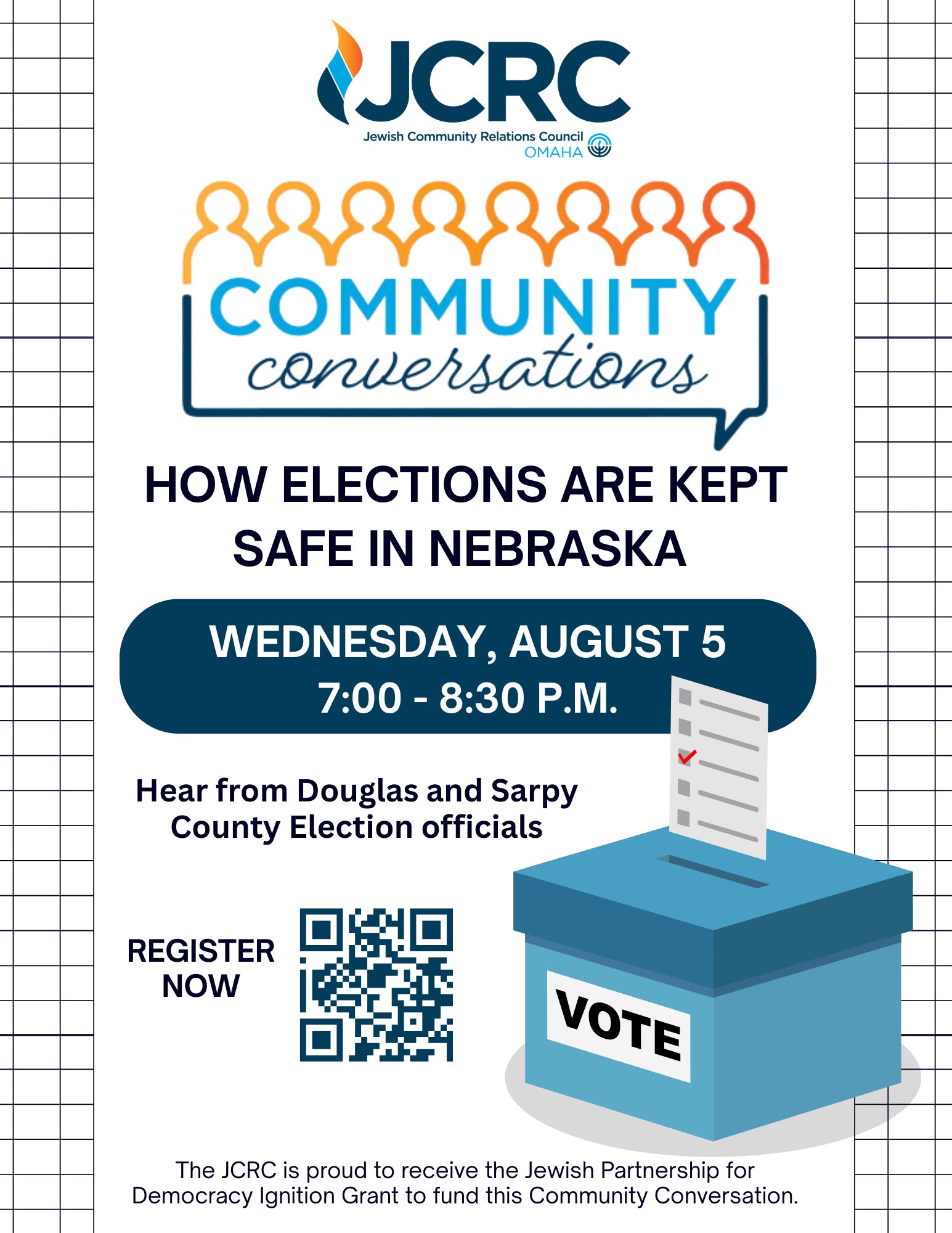
With election security at the center of today’s national conversation, how are local votes actually kept safe?
To answer the community’s biggest questions about election integrity, the Jewish Community Relations Council (JCRC) invites you to a vital Community Conversation on Wednesday, August 5, from 7:00 to 8:30 p.m.
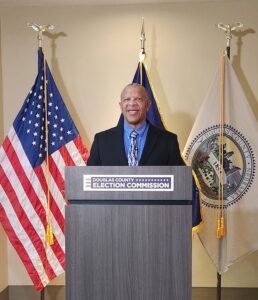
The informative session features Douglas and Sarpy County Election officials. Together they will pull back the curtain on Nebraska’s election security measures and explain what it is really like to work as a poll worker.
Registration is required to attend. Come get the facts straight from the officials who run our local systems and find out how you can help this fall!
Register here: igfn.us/form/jxRe5g
Moderated by Dr. Ari Kohen
After two years marked by deep pain, uncertainty, and rising antisemitism, our community—like so many others—has felt the strain of global tensions. We’ve seen painful rhetoric, rising antisemitism and Islamophobia, and confusion about what to believe and how to talk about the Middle East. JCRC invites you to a special community conversation featuring Sharaka, an organization working to build bridges between Israelis and Arabs, Jews and Muslims, and communities that have long been separated by conflict, distance, and misunderstanding.
What is Sharaka?
Sharaka means “partnership” in Arabic. It is a groundbreaking initiative born out of the Abraham Accords. Its members—young leaders from across the Middle East—work to create understanding between peoples who for generations have had few chances to meet face to face.
Whether you follow Middle East issues closely or simply want to better understand what real bridge-building looks like, this is a conversation you won’t want to miss.
Registration is required. Email pmonsky@jewishomaha.org to register.
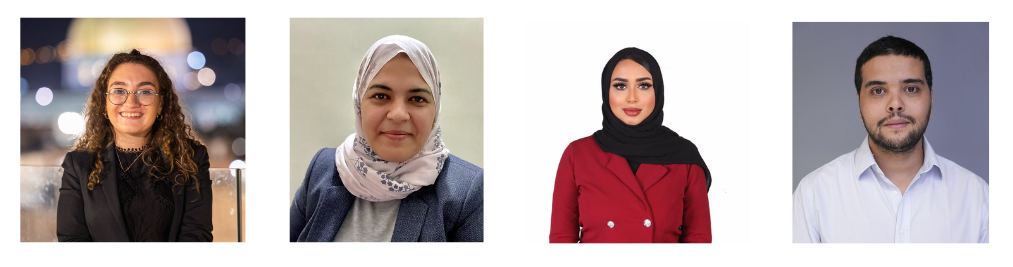
Alyssa Annis (Israel): Sharaka’s Holocaust Education Program Manager. She is dedicated to Holocaust education and remembrance, leading historical education projects across the Arab and Muslim world.
Dalia Ziada (Egypt): Peace activist, Writer, Chairperson of the Liberal Democracy Institute, and executive director of MEEM Center
Fatema Al Harbi (Bahrain): Fatema, the first Bahraini youth to visit Israel with Sharaka, is a trailblazer in promoting women’s rights. A Ph.D. candidate in business management and leadership and an accomplished author, she bridges cultures through her advocacy and storytelling.
Youssef Elazhari (Morocco): Youssef Elazhari is an entrepreneur and Sharaka’s Director of Moroccan Affairs. He is a PhD researcher specializing in emerging entrepreneurial skills shaped by artificial intelligence. A committed social and peace activist, he founded Fihria, an initiative dedicated to combating school dropout among girls in Morocco. He is also a former Global Shaper with the World Economic Forum.
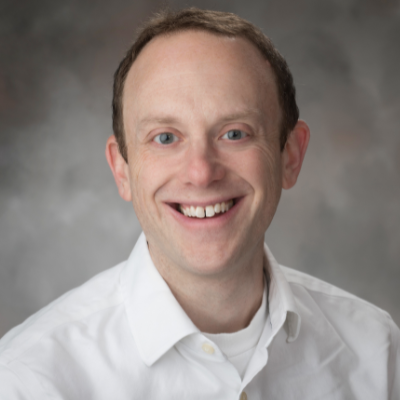 Moderator: Dr. Ari Kohen, Professor of Political Science at the University of Nebraska–Lincoln. Ari’s scholarship and teaching focus on human rights, moral courage, and the responsibilities we share toward one another in a democratic society. His steady, thoughtful approach will help guide a meaningful dialogue rooted in curiosity, civility, and shared humanity.
As partisan politics continues to shape American public discourse, the Jewish community struggles to define the commitments we are meant to share with each other and to find ways to hold together across difference. How can we identify the kinds of ideas and ideals that should transcend what divides us? And how might we imagine Jewish community in a divided America? Proudly co-sponsored by the JCRC and Jewish Federation of Omaha Foundation
Join the JCRC and IHE on March 27 for a joint Community Conversation with Dr. Andreas Musolff, Emeritus Professor of Intercultural Communication at the University of East Anglia. Musolff will be discussing conspiracy theories in Nazi and Neo-Nazi discourse and how to counter them using tools from cognitive linguistics. This event is sponsored by the Jewish Community Relations Council, Institute for Holocaust Education, UNL Harris Center for Judaic Studies, UNL Research, and UNL Teaching, Learning, and Teacher Education.
Andreas Musolff graduated from Düsseldorf University in 1983 and received his PhD in German Linguistics in 1989. He also worked for 18 months at a School for Disabled Children. He has since taught at universities in Germany and the United Kingdom and has held visiting professorships also in Israel, Spain, and the Netherlands. He is now Professor emeritus of Intercultural Communication at the University of East Anglia in Norwich (UK). He has published widely on Intercultural and Multicultural communication, Metaphor Studies, and Public Discourse Analysis; his book publications include the monographs National Conceptualisations of the Body Politic, Political Metaphor Analysis, Metaphor, Nation and the Holocaust, Metaphor and Political Discourse, and 11 co-edited volumes. He is currently preparing a monograph on Cognition and Conspiracy Theory, to come out with CUP by the end of this year, and a co-edited volume on Healthcare, Language and Inclusivity, with Routledge.


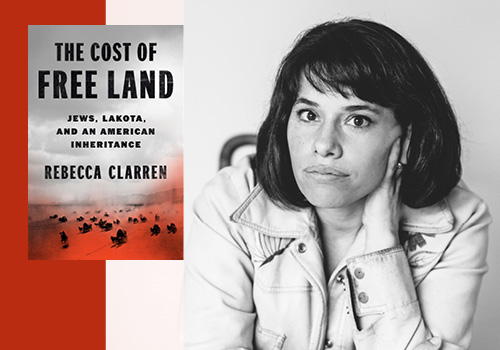
Journalist and award-winning author Rebecca Clarren focuses on a conversation surrounding her latest book, The Cost of Free Land: Jews, Lakota and an American Inheritance.
A blend of history, journalism and memoir, The Cost of Free Land investigates how 20th-century federal policies that gave her ancestors – Jews fleeing oppression in Russia – free land on the South Dakota prairie and a pathway to the middle class, came at great cost to their Lakota neighbors. The book not only retells this entangled history but grapples with what can be done to reconcile the past.
“Memorable… Fascinating… A deft mix of personal and social history that recounts the transfer of Native American lands to non-Indigenous settlers, including Jews fleeing antisemitic violence. . . [The Cost of Free Land], troubling and inspiring, seeks a humane path toward restitution.”—Kirkus (*starred review*)
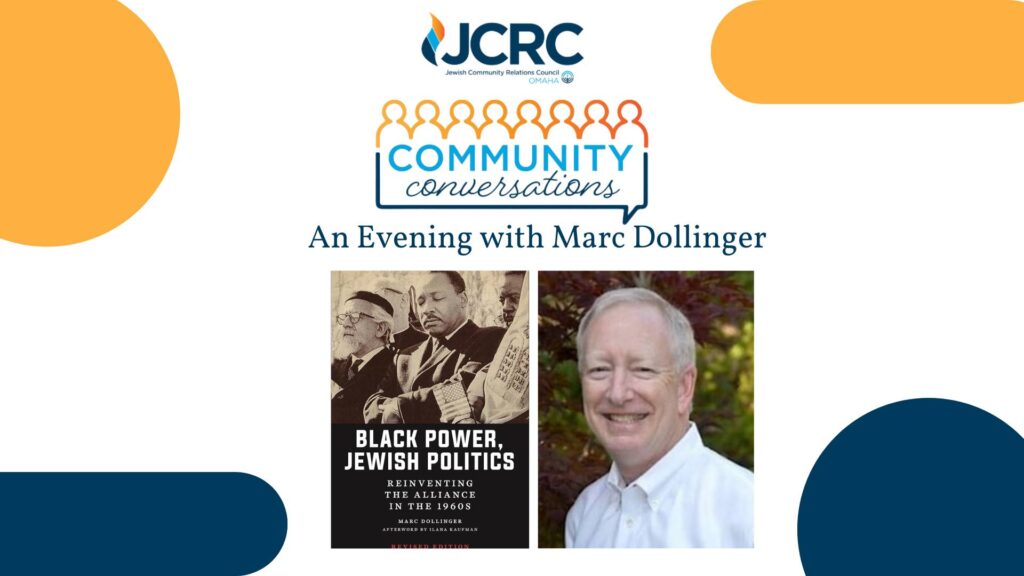
Marc Dollinger, the author of Black Power, Jewish Politics: Reinventing the Alliance in the 1960s, discusses the re-release of his book. He will focus on the complex history of the Black-Jewish alliance during the civil rights era and its evolution. Dollinger, a respected scholar in Jewish Studies, offers a fresh perspective on this topic, challenging many established narratives about the relationship between these communities during the 1950s and 1960s.
This event is part of a larger initiative, the Capstone project from the inaugural cohort of the Rekindle program, which is organized by the Jewish Community Relations Council (JCRC). This program focuses on fostering dialogue and understanding between Black and Jewish communities through structured conversations and collaborations.
In preparation for the 2024 Jewish Day of Action on February 29th, the Community Conversation focused on the why and how-to’s of citizen advocacy, explaining petitions and ballot initiatives, and how to become a petitioner. Helping citizen lobbyists feel more comfortable with and have a deeper appreciation for direct democracy and initiatives and enacting meaningful policy change.
Petitioners for all eight initiatives in circulation for the 2024 election in Nebraska were invited to attend the evening event, address questions, and collect signatures.
The panel featured former Nebraska State Senator from Lincon, Adam Morfeld, Omaid Zabih, Strategy Senior Director at Nebraska Appleseed, Jo Giles, executive director of The Women’s Fund of Omaha, and representatives of The League of Women Voters.
View the recording of Advocacy Bootcamp 101 here.
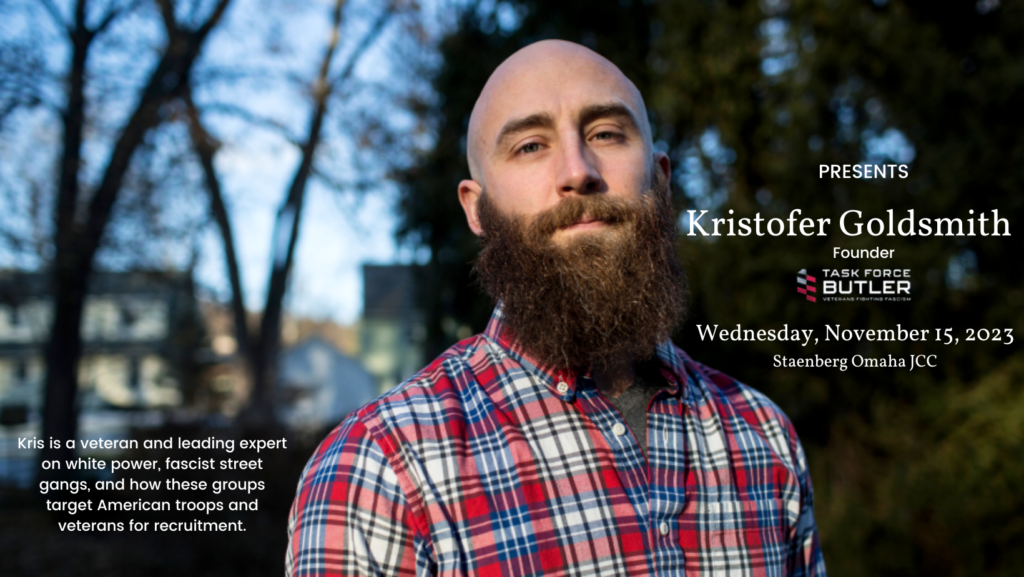
Kristofer Goldsmith is the founder and CEO of Task Force Butler Institute, a nonprofit organization that engages veterans in the hobby of maintaining a democracy, and Sparverius LLC, a veteran-owned firm that detects and disrupts disinformation and extremism threats against America. Goldsmith is a Jewish veteran advocate and an open-source intelligence expert with over 10 years of experience in policy, research, and leadership. View conversation here.
An in-person and virtual Community Conversation with Dr. Gina Ligon, Director of Counterterrorism Research Initiatives at NCITE, Dan Feferman and Dr. Ahmed Khuzaie of the Sharaka Project. Erin Grace will moderate a conversation about Israel’s war with HAMAS, how it is different from previous conflicts with FTO foes of Israel, how the relationships with the countries in the Abraham Accords may be impacted, and what are desired outcomes for Israel and the world. View conversation here.
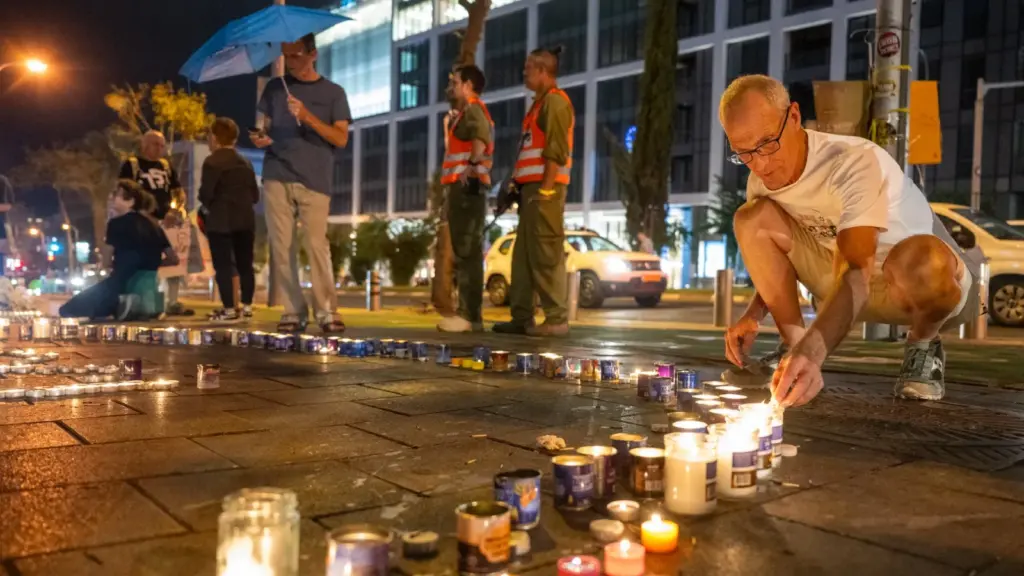
Photo by Alexi J. Rosenfeld / Getty Images
The JCRC is honored and thrilled to launch Welcoming the Stranger. This initiative will focus on assisting two or more of the 40 refugee families arriving in Omaha from Ukraine, Afghanistan, Democratic Republic of Congo and Syria between now and October 1. The JCRC is coordinating a Jewish community volunteer effort to help sponsor families, provide furniture and household items and set up apartments. Learn more
JCRC of Omaha presents a conversation about What We Should Know About Israel’s Judicial Reform and Other Policy Priorities – the complexities and concerns about the state of democracy and growing demonstrations in Israel. View conversation here.
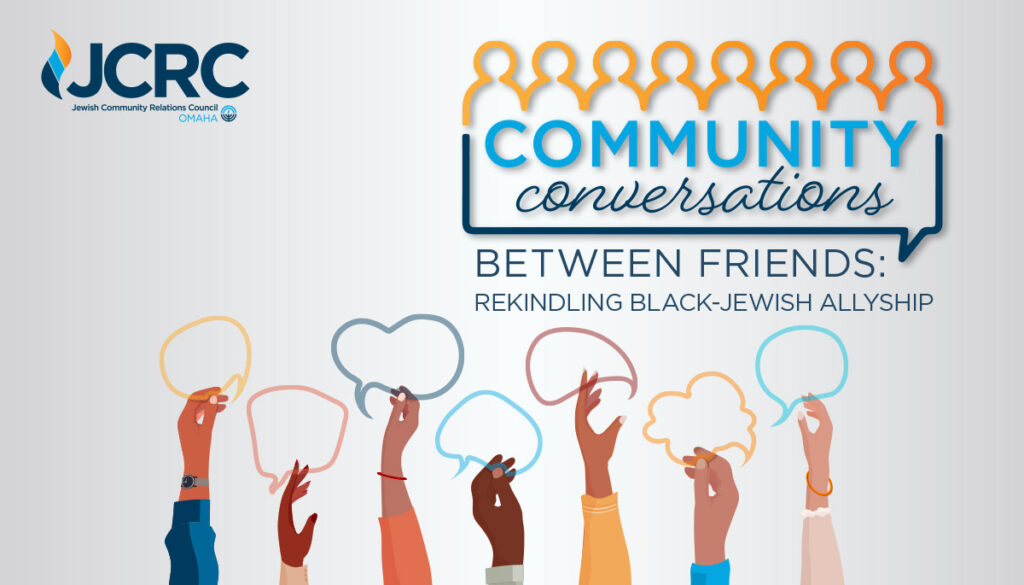
An intimate conversation with Terri Sanders, publisher of the Black-owned Omaha Star newspaper, and Annette van de Kamp-Wright, editor of the Omaha Jewish Press, moderated by Marty Shukert.
View the Conversation here
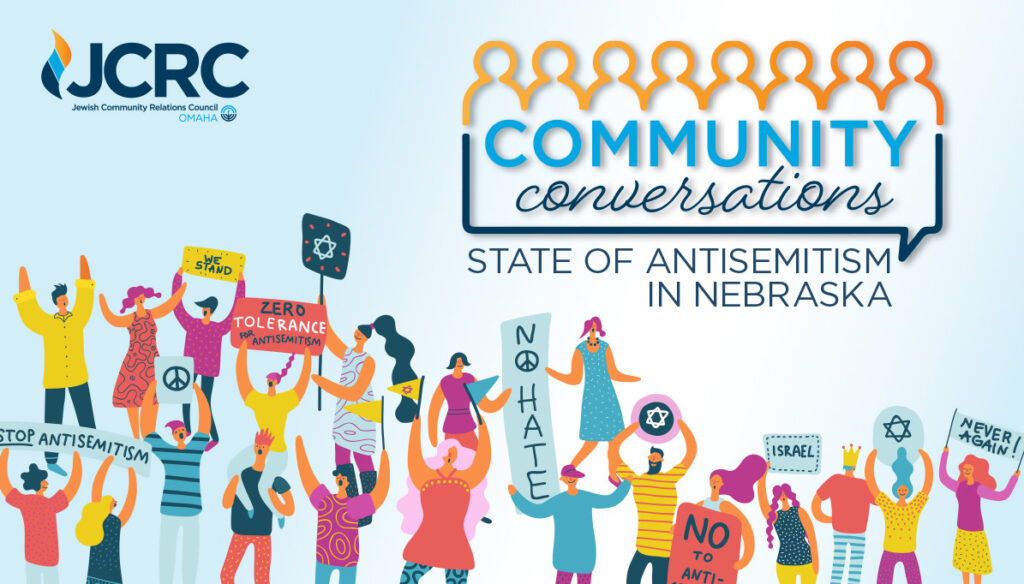
A Community Conversation to address the rise of antisemitism, what we should be aware of, and what is being done to keep our community – and others – safe.
Our panel of experts features Special Agent in Charge of the Nebraska-Iowa FBI Field Office, Eugene Kowel; Felix Ungerman, representing Congressman Don Bacon’s office; the City of Omaha’s Director of Diversity Equity and Inclusion, Keith Station; Regional Director of the Anti-Defamation League Midwest, David Goldenberg; JFO’s Safety & Security Manager, James Donahue; and Dr. Ari Kohen, political science professor, chair of the Norman and Bernice Harris Center for Judaic Studies, and editor of the book Antisemitism on the Rise: The 1930’s and Today.
View the conversation here.
A panel of local and national experts in a moderated discussion about protecting reproductive rights in Nebraska.
OUR GOAL: to equip attendees with tools to advocate for reproductive freedom, learn how to build coalitions, and how to communicate with local lawmakers.