
JFO Advocates for Legislation to Strengthen Community Security

In today’s complex world, the risk of security vulnerabilities continues to grow, especially within the Jewish community. Across the country, antisemitism remains an ever-present threat, demanding more security resources than ever before. This rise in antisemitism has spurred the creation of the Jewish American Security Act, S. 4576, a comprehensive, bipartisan bill introduced by U.S. Senators Jacky Rosen (D-Nev.) and James Lankford (R-Okla). Congressman Don Bacon (R-Neb.) co-sponsored the bill.

The Jewish American Security Act (JASA) aims to strengthen federal efforts to fight antisemitism, including in U.S. academic settings, at Jewish communal institutions and online. Passage of the bill would provide nationwide funding for security enhancements at synagogues, Jewish community centers, day schools and other at-risk nonprofits. At its core, the bill authorizes funding of up to $1 billion annually for the Nonprofit Security Grant Program (NSGP).

The NSGP was first proposed by the Jewish Federations of North America in 2001 to create a federal funding stream that would provide critical security enhancements to nonprofit and faith-based institutions facing threats. The program was implemented in 2004. Congress funded the first year of the program at $25 million. By 2025, national funding had grown to $274 million. Demand increased significantly as well. In 2024, the NSGP was able to fulfill only 43% of the total applications submitted.

Under current guidelines, the NSGP allows eligible 501(c)(3) nonprofits to request up to $200,000 per physical site or address. Funds may be used only for approved security enhancements. The Jewish Federation of Omaha has been a recipient of NSGP funding, but recently, its applications have been denied.

Phil Malcom, chief operating officer for the Jewish Federation of Omaha, attributes this lack of funding to the competitiveness of the program.

“The evolution of the threat landscape over the past 25 years has created a huge increase in demand for this program,” he said.

Thanks in part to prior NSGP funding, the JFO was able to launch the Jewish Federation of Omaha Community Security Initiative in 2022. This robust initiative was designed to collectively bolster the security of the entire Omaha Jewish community. Since then, the JFO has increased security spending significantly — a necessary investment to enhance the safety of those who wish to participate in Jewish life.

The potential life-saving impact of these increased security measures is not taken lightly. Malcom said the recent loss of NSGP funding is felt, especially as the cost to grow and maintain security measures is projected to increase.

“Previous NSGP funding helped us build the security camera system across our campus. That technology has been a tremendous resource in improving our response time to security incidents,” he said. “We’ve accomplished a lot, but there is always more to do. That lift becomes more challenging without the NSGP funding.”

Funding for JFO security comes from a variety of sources. Some funding is provided by special grants locally and nationally, including Jewish Federations of North America’s LiveSecure program and the Tepper Foundation, but the rest is funded through campus operations.

To help address the shortage of security funding at the local level, the Jewish Community Relations Council, an agency of the JFO, worked closely with former state Sen. Tom Brewer to pass legislation that established a state-level security grant program for Nebraska nonprofits. This legislation was passed in 2024; however, state government officials continue to divert the bill’s funding because of severe budget deficits.

“Americans of all faiths deserve the right to gather safely with their communities. This is why the JFO and the JCRC are working at both local and national levels to advance the legislation needed to keep our communities safe,” said Sharon Brodkey, executive director of the JCRC.

Brodkey said she is certain passage of JASA would have a meaningful impact on the local community, both Jewish and interfaith.

“JASA makes several significant enhancements to take security for the Jewish community to a new level. Current NSGP funding has focused on material physical security enhancements such as cameras, access controls, alarm systems, etc. While some personnel-related expenses have been eligible in limited circumstances, we have been pushing elected officials to address and cover the cost of having trained security officers on-site,” Brodkey said. “The Jewish American Security Act recognizes that today’s threat environment requires protecting Jewish life more broadly — from synagogues and schools to college campuses and civil rights enforcement.”

Brodkey encourages community members to reach out to their congressional representatives and advocate for JASA.

“The community can advocate by reaching out to Mike Flood and Adrian Smith and asking them to join Congressman Bacon in co-sponsoring this once-in-a-generation legislation,” she said.

While the fate of the bill has yet to be determined, Malcom said the JFO remains committed to building a culture of security preparedness.

“We will continue to focus on security preparedness while remaining warm and welcoming,” he said. “The JFO will always work to sustain our community through advocating, mobilizing resources, supporting vital services, and fostering connection, care, and collective responsibility.”

6/23/26

JFO Celebrates 25 Years of the IHE
Read More

6/23/26

JFO Campus Safety and Security Manager Receives Award
Read More

JFO Campus Safety and Security Manager Receives Award

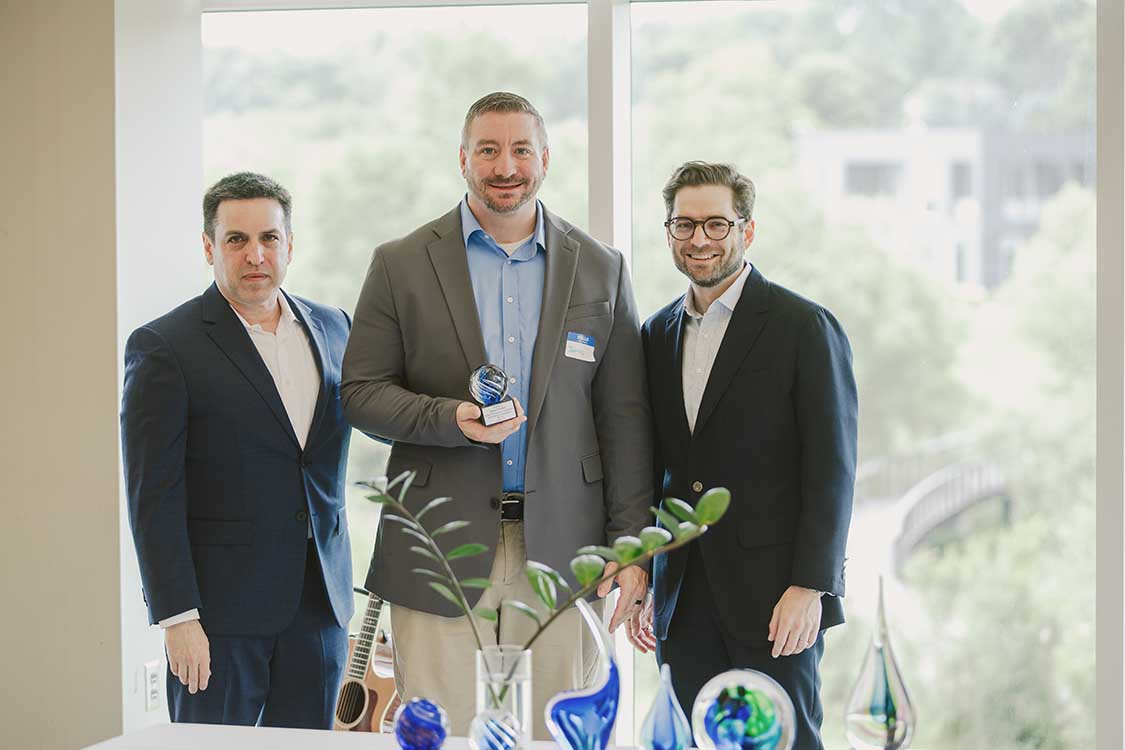
Temple Israel recently honored James Donahue, campus safety and security manager at the Jewish Federation of Omaha, with the Shomer Ha’Ir Award for Contributions from Outside the Congregation. This was the first year the award was given out.

Donahue was selected for his contributions to the greater Jewish community.

“We are so grateful to James,” Rabbi Benjamin Sharff said. “We cannot keep our community safe alone. We need friends and allies who stand with us. James embodies these values. This is why Temple Israel was honored to present him with the Shomer Ha’Ir Award.”

When asked why Donahue was selected, Sharff provided several reasons.

“James has gone above and beyond in support of our security challenges. He has worked with us to create a Security Response Group so local congregations and organizations can address specific challenges more quickly. He has worked with Temple Israel’s security committee and made suggestions for security improvements to our facility and cemetery. He has advised the security response group for Tri-Faith and helped address concerns and challenges on the Commons,” Sharff said. “James has been forthcoming in sharing guidance on security-related questions, no matter how large or small. He is always willing to take our calls and answer our emails. He is a delightful presence and consistently offers his expertise to help keep us safe.”

Donahue began working at the Jewish Federation of Omaha in 2022. He was hired in conjunction with the launch of the JFO’s Community Security Initiative, an effort created to strengthen preparedness and mitigate the modern threat landscape. He came to the JFO with more than 18 years of security experience, having served both as a U.S. Marine and as a security contractor in Afghanistan for the Department of Defense.

Over the past four years, Donahue’s impact on the community has been substantial. Under his leadership, the physical and procedural elements of security across the Staenberg Kooper Fellman Campus have been significantly enhanced. He has also worked closely with local synagogues, helping them complete threat assessments and review materials required for nonprofit security grant applications.

“My work as the JFO campus safety and security manager is multifaceted,” Donahue said. “In addition to physical security measures, there is an intelligence component. I work to provide clear, direct channels for documenting antisemitic incidents and suspicious activity. I ensure this information is immediately shared with law enforcement and national networks. I organize safety and security preparedness training for JFO staff and the broader community.”

Whether at a school, shopping mall or house of worship, Donahue recognizes that the need for security in today’s world extends across all types of institutions. Through his work, he aims to enact rigorous safety protocols without compromising the warmth and accessibility that define a shared community space.

“It’s about creating a culture of awareness that extends from the community’s values, rather than creating an intrusive presence that generates fear,” he said.

One experience that further informed this approach was Donahue’s first trip to Israel in 2025. As part of a national program through the Jewish Federations of North America and the Secure Community Network, Donahue had the opportunity to learn firsthand about security measures across Israel. He found the experience transformative on both a personal and professional level.

“My time in Israel forced me to rethink my approach to readiness. Much of the military and security training I’ve had has focused on immediate, tactical reactions to a crisis. In Israel, I saw a holistic model where the focus is split equally between proactive prevention and rapid psychological resilience after an incident. It taught me that a secure environment isn’t just one that prevents emergencies, but one that is built to recover, adapt and keep moving forward without missing a beat,” he said. “It was inspiring.”

Donahue credits these experiences, along with the vision of the Jewish Federation of Omaha and the community’s vigilance, as key factors in his success.

“I’m fortunate to work with a great team of people,” he said. “The work the JFO and its agencies do to enhance the safety of the community goes well beyond my position. The staff actively advocate for and assist local Jewish and interfaith institutions in accessing state and federal security grants to obtain funding for physical security upgrades. The greater Jewish community also has been great to work with.”

“To me, this award is a reflection of the hard work we have all put in over the last few years,” he added. “It’s incredibly rewarding to see the JFO’s dedication to keeping the community safe recognized at this level. While my name may be on the award, it truly represents a collective effort, and it motivates me to keep pushing the boundaries of what we can achieve next.”

6/23/26

JFO Celebrates 25 Years of the IHE
Read More

6/23/26

JFO Advocates for Legislation to Strengthen Community Security
Read More

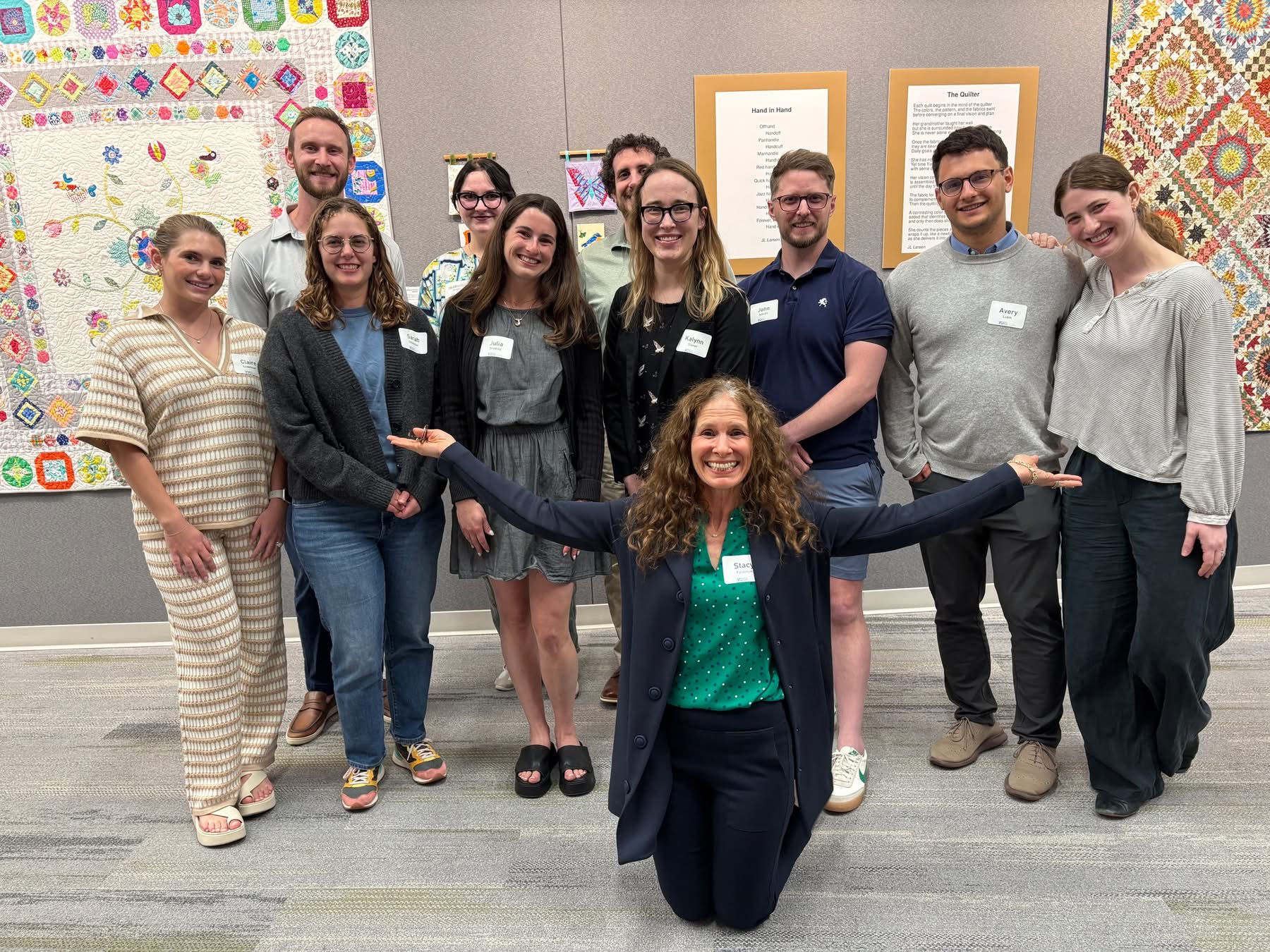
Stacy Feldman Named Chief Impact Officer

The Jewish Federation of Omaha is pleased to announce that Stacy Feldman will assume the role of Chief Impact Officer beginning April 27, 2026. As a senior executive leader and primary driver of the Federation’s impact strategy, Feldman will guide how the organization defines, measures, and delivers meaningful outcomes for the community. The position is newly created and reflects the Federation’s growing focus on intentional, accountable, and purpose-driven impact.

Stacy brings more than 20 years of corporate and nonprofit leadership experience to the role. She previously served as Director of Community Impact at the Jewish Federation of the Heart of New Jersey, where she oversaw community allocations, engagement, and strategic marketing efforts.

After moving to Nebraska with her family in 2021, Feldman joined the Jewish Federation of Omaha, where she assumed increasing leadership responsibility across impact strategy and organizational learning. Most recently, as Impact Data Manager, she worked closely with agency directors and senior leadership to define impact, support data-driven decision-making, and lay the groundwork for a more intentional, community-wide understanding of the Federation’s programs and services. Those insights, coupled with Feldman’s leadership in aligning data, strategy, and community needs, helped shape the creation of the Chief Impact Officer role.
The Jewish Federation of Omaha, with its mission to build and sustain a strong and vibrant Omaha Jewish community while supporting Jews in Israel and around the world, supports a wide-ranging ecosystem of programs and services that serve families, children, seniors, and individuals at every stage of life.

“With a scope of work this large, it’s critical that we understand not just what we do, but how well it’s working,” said Bob Goldberg, Chief Executive Officer of the Jewish Federation of Omaha. “Stacy’s leadership ensures that impact is integrated across the entire organization—informing strategy, strengthening accountability, and keeping our mission and purpose at the center of every decision.”

As Chief Impact Officer, Feldman serves as a senior organizational leader responsible for ensuring that the Federation’s work is purposeful, measurable, and connected to its broader mission—so that every program, every dollar, and every partnership reflects the Federation’s purpose of caring for and about one another, and helps individuals feel seen, supported, and connected to something bigger than themselves.

“In my new role, we’re expanding the scope to take a more holistic look at the organization,” Stacy said. “Over the past year, I’ve spent a lot of time working with campus leaders to define impact and track the success of their programs and services. Now, I plan to take a step back to move forward—looking more deeply at what our agencies do, why they do it, and who they serve. Each agency has its own unique mission and purpose, and I want to better understand their day-to-day work so I can help connect it to the Federation’s larger mission and goals. At its core, my role is about building the shared tools and understanding that empower leaders to take ownership of data-driven impact measurement in their day-to-day work.”

As a member of the Federation’s senior leadership team, Feldman will work closely with executive leadership, the board, agency leadership teams, donors, and partners to identify needs, set priorities, and measure results—ensuring alignment across strategy, funding, and community impact.

Feldman views data as a tool for strategic decision-making across the organization. “I think of data as a puzzle,” she said. “It’s like dumping all the pieces of a 1,000-piece puzzle onto a table. My job is to put them together to create a clear picture. Having a solid understanding of our organizational data helps us make decisions based on facts rather than assumptions. It allows us to learn what’s working, what needs adjusting, and how we can better serve our community.”

Importantly, Stacy views community voice as an essential part of that picture. She notes that data and relationships go hand in hand. Understanding how people experience what the Federation has to offer—and whether they feel welcomed, valued, and connected—is essential to understanding true impact.

“Data isn’t only numbers,” she said. “Connecting with people about why they attend programs and utilize our services, what they take away from them, and what’s on their minds helps us understand what matters to them. It also helps members of our community feel like they belong. That insight is another piece of the puzzle.”

Stacy also sees storytelling as central to impact work.

“Insight is also storytelling, and everyone loves a good story,” she said. “It’s our responsibility to show our donors and our community why what we do matters.”

In the coming months, community members may see more opportunities to share feedback as part of the creation of this new role.
“Listening to our community is the best way to ensure our work continues to drive meaningful, lasting change,” she said.

Although relatively new to Nebraska, Stacy says she feels deeply connected to the Omaha Jewish community.

“I’m incredibly excited and filled with gratitude,” she said. “This community has been so welcoming. I love the warmth of Midwest culture. I feel lucky to be part of this community—and even luckier to be able to work on its behalf.”

6/23/26

JFO Celebrates 25 Years of the IHE
Read More

6/23/26

JFO Advocates for Legislation to Strengthen Community Security
Read More