8/11/26
RBJH: A Legacy We Proudly Carry Forward – Part III
As we prepare to open the new addition to the Rose Blumkin Jewish Home, we reflect on our community’s history of senior care. To help us fully understand the significance of where we are today, this series will look back at the journey that brought us here and the previous generations who made this moment possible. Special thanks to the Nebraska Jewish Historical Society archives and Jewish Press archives for providing source materials for this article.
Part 3: 1990 – 2010
“To be the best. That is our goal,” said Eugene Brandt, Executive Director of the Rose Blumkin Jewish Home in 1994.
Since its opening in 1982, RBJH had set the standard for quality care. The Home built a superior reputation throughout the medical community, earning the praise of industry professionals.
The growth at RBJH reflected societal advancements. The 90s had been a decade of change seeing the collapse of the Soviet Union, the Gulf War, the sale of the first flip phone, and the birth of the world wide web. The digital information age had begun and technology was rapidly advancing. The pressure to keep up with these advancements, combined with shifts in resident demographics and reforms on government funding, challenged the financial stability of the Home.
The cost of maintaining RBJH without letting it go downhill was substantial. By 1994 it cost $3,800,000 a year to sustain operations, an average of $33,000 per resident. No other nursing homes in Omaha provided the same breadth of services as RBJH. Daily room rates included meals, wheelchairs, walkers, oxygen, IVs, personal hygiene supplies, van transportation, etc. Annually, the dietary department was making 125,000 meals and 42,000 afternoon snacks.
The average age of incoming residents was also increasing due to assisted living, home health care, and other senior services. Those who were admitted to nursing homes usually had four or more chronic conditions, requiring a higher level of care. Health care reform put state and federal support for nursing homes under scrutiny. Medicare reimbursements totaled 2% of the Home’s income, barely enough to cover expenses. All of these factors resulted in RBJH relying on endowment funds to keep rates affordable.
Jerry Dann, past president of the Bureau for The Aging, along with board members Bert Lewis and Stan Silverman spearheaded an endowment fund drive. Norman Veitzer, chairman of the Board of Trustees of the JFO Foundation, and Sheldon Bernstein, Endowment Director, worked to protect and nurture the growth of funds set up to benefit RBJH and all other agencies of the JFO. The endowment fund drive emphasized community generosity as the starting point.
RBJH worked closely with the JFO Foundation. Supporting or creating endowment funds would help maintain facility operations while also honoring loved ones by keeping their values alive. Using existing endowment funds as examples, the committee illustrated how contributions could be both personally fulfilling and beneficial to the community. The Ernie I-Go Nogg Memorial Fund had recently provided an ice cream machine for the Home, symbolic of Ernie’s desire to make people feel good. The Frohm Repair Endowment Fund allowed for the replacement of lifts needed to help move residents, symbolic of the family’s commitment to community care. The Sara Rose Woskoff Arts and Crafts Resource Fund provided residents with art supplies, art programs, and intergenerational classes, symbolic of the joy Sara had found when she led residents in creative art projects. The collective impact of these gifts enriched the lives of residents and inspired community participation in sustaining the Home.
In 1998, Steve and Marcia Pitlor, along with Patty and Steve Nogg, led a $5 million community campaign for additions and improvements to the Jewish Community Center. In 1999, the Phil Sokolof Fitness Center opened. With new improvements across campus, attention soon turned to the Blumkin Home.
In 2002, Michael Silverman took over as the Executive Director of Jewish Senior Services, and discussions of a “new” Blumkin Home began. Howard Kooper, Joanie Bernstein, Bob Lepp, Bob Belgrade, Harlan Noddle, and Jan Goldstein formed a steering committee. The committee wanted to determine whether the existing facility and services would satisfactorily meet future demand. They found seniors wanted a space where their medical concerns could be managed, but in a place that felt like home. In short, the needs of the current population were different from those the building was originally designed to serve.
It had been twenty years since the opening of RBJH. State-of-the-art nursing home facilities built in the early 1980s prioritized medical needs almost exclusively. RBJH had been designed on the hospital model. Long hallways, challenging for both residents and nurses, and an overall institutional feeling were disadvantages of this model. National trends in senior health care had shifted toward the hospitality industry, revolutionizing nursing home design.
“These details wouldn’t matter for a few days at a time, but if you’re moving somewhere to live, you want it to feel like home,” Silverman told The Jewish Press in a 2005 interview. “The institutional design of the current facility interferes with the level of control residents want over their lives. Families want this for their loved ones as well.”
In 2005, the Jewish Federation of Omaha approved the “New Beginning” campaign. Plans sought to usher in a new era of senior care by “rebuilding, remodeling, renovating, and expanding” the current facility. The focus was on comfort, beauty, and ambiance. Paul and Sandy Epstein and Richard and Joanie Jacobson lead the community-wide fund raising campaign. The campaign included the refurbishment of resident rooms, new family-style dining rooms, and bright, open spaces with greenery and artwork. Plans also called for a 20,000-square-foot expansion that would house a short-term care area and a 25-bed Special Care Unit. The concept of a “Main Street” design was selected for the building’s center to highlight the importance of connecting with community. All plans were chosen with the comfort and safety of the residents in mind. The first step, prior to formal construction, was the creation of two prototype resident rooms. Built according to architectural plans, the rooms were piloted to test the layout with staff, residents, and community members.
The “New Beginning” project was estimated to cost $18 million. The contract was awarded to Hawkins Construction Company. The JFO Foundation, now under the leadership of Marty Ricks, continued to play an important role. Preliminary construction started in the fall of 2006. Work took place over the next four years in three phases. Phase One included the transformation of rooms on the existing southwest corridor. Phase Two included the expansion of rooms in the northwest wing and the building of a new kitchen. Phase Three included the removal of the existing kitchen, relocation of the therapy suite, and renovation of fourteen rooms in the north hall.
Plans originally called for 96 beds. During construction, it was increased to 105. Upon completion of the resident rooms, work began on Main Street. It was the final portion. The “New Beginning” project was completed in 2010. RBJH was now a modern, full-service facility offering personalized care to residents of all backgrounds and faiths.
-
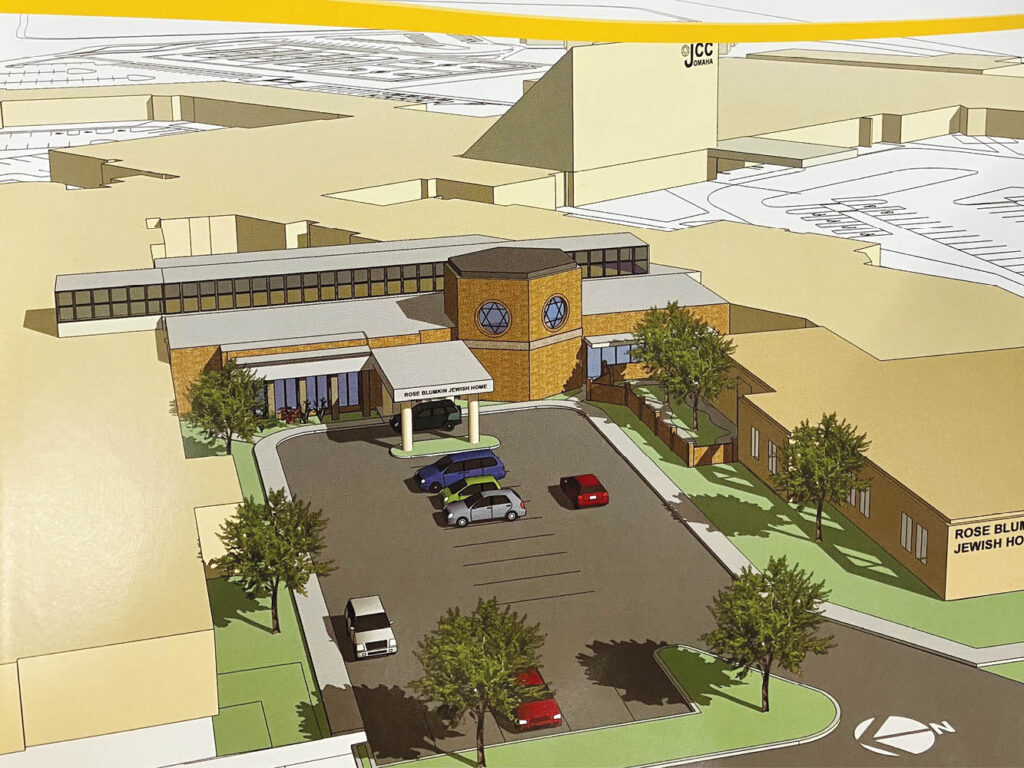
- 2005: Renderings for the “New Beginnings” project
-
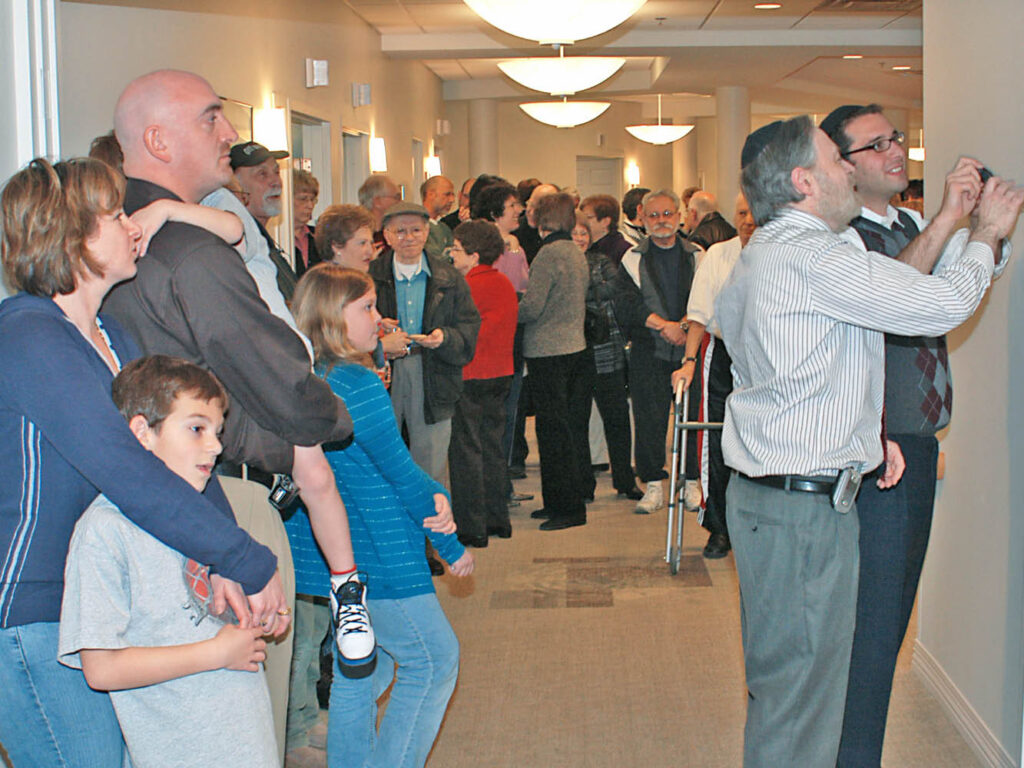
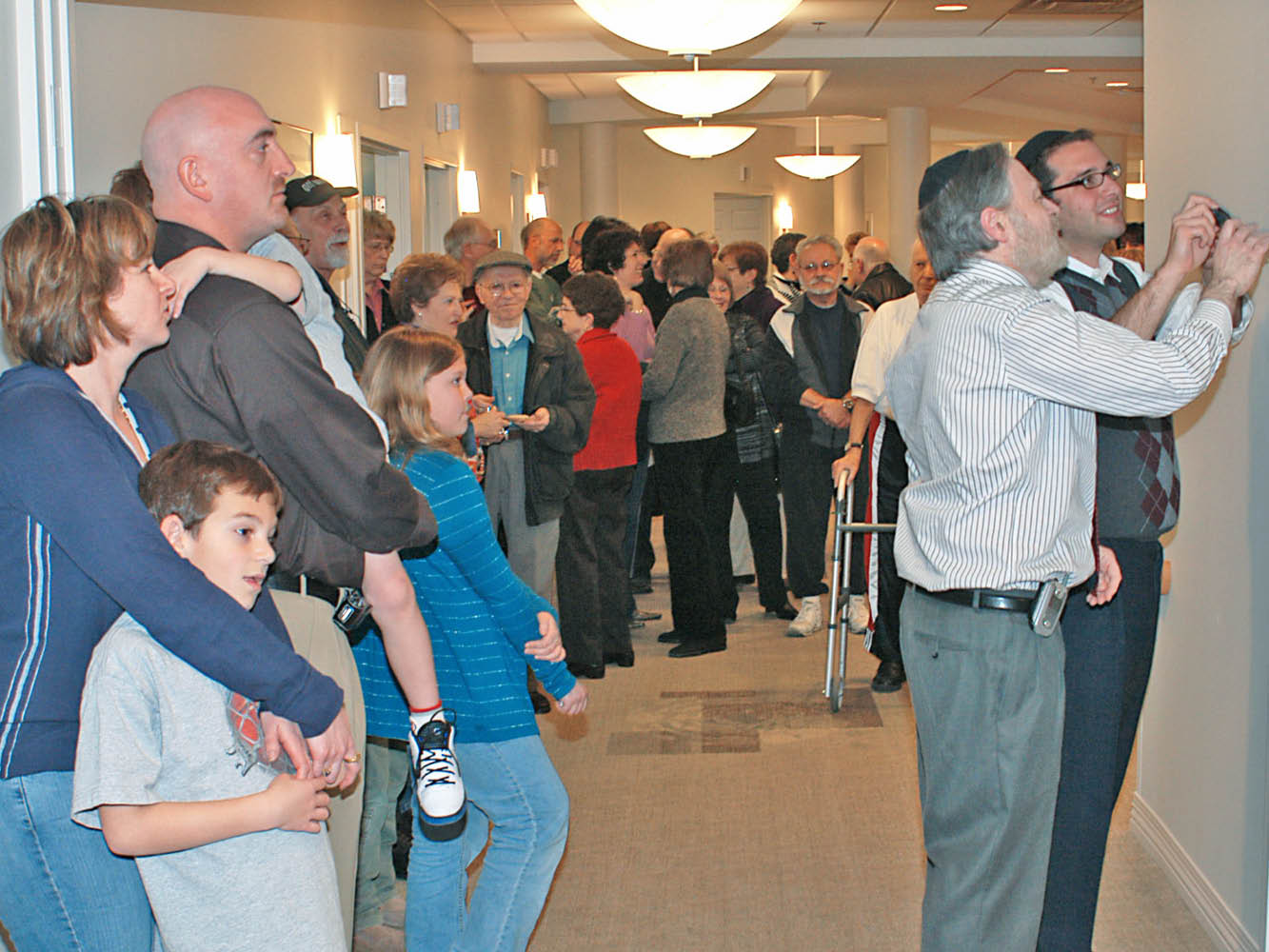
- 2010: Mezuzah hanging and dedication at the opening of the new RBJH
-
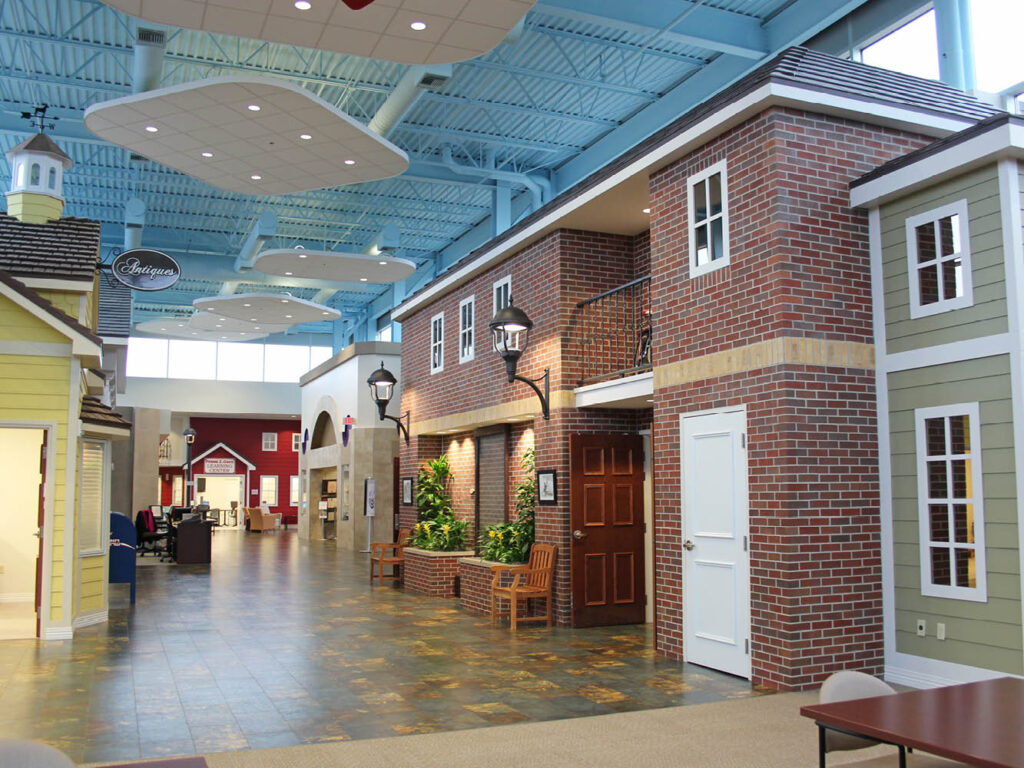
- 2010: Main Street of the renovated Rose Blumkin Jewish Home
-
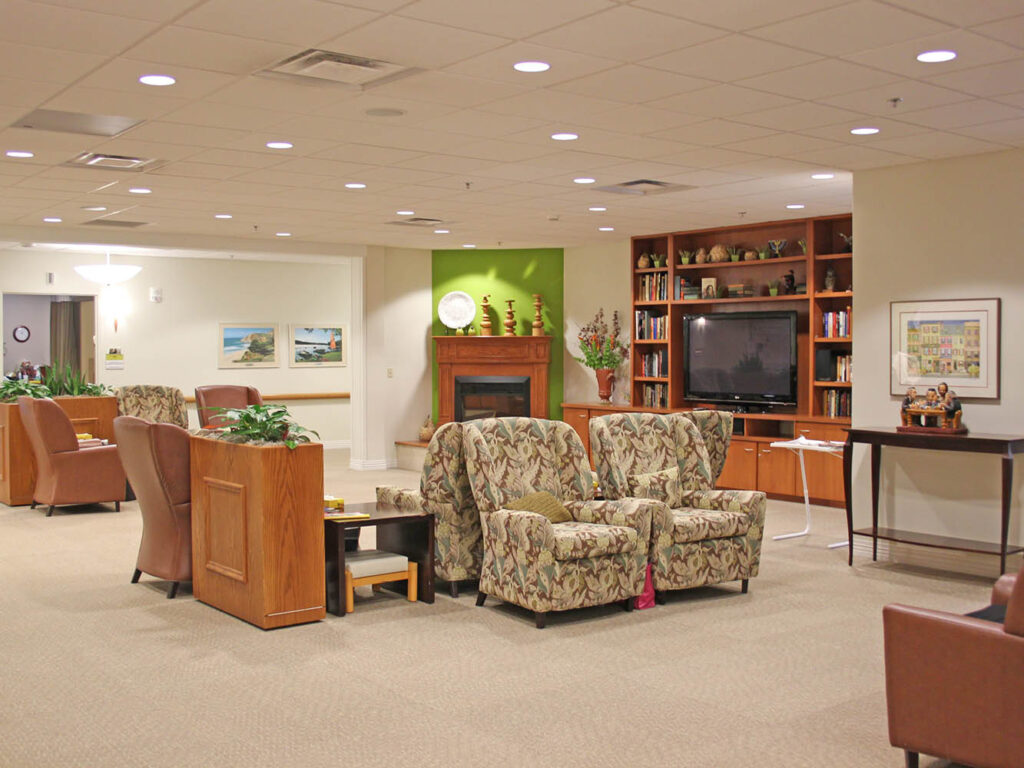
- 2010s: New lounge area at the new Rose Blumkin Jewish Home
-
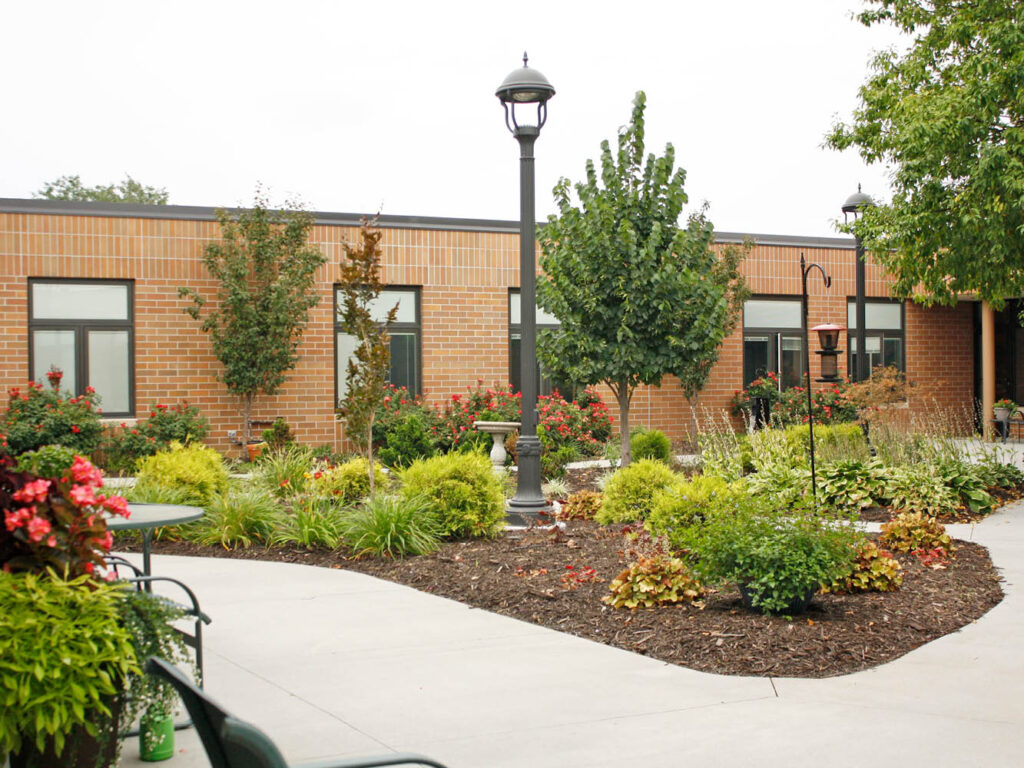
- 2010s: New courtyard at the Rose Blumkin Jewish Home
-
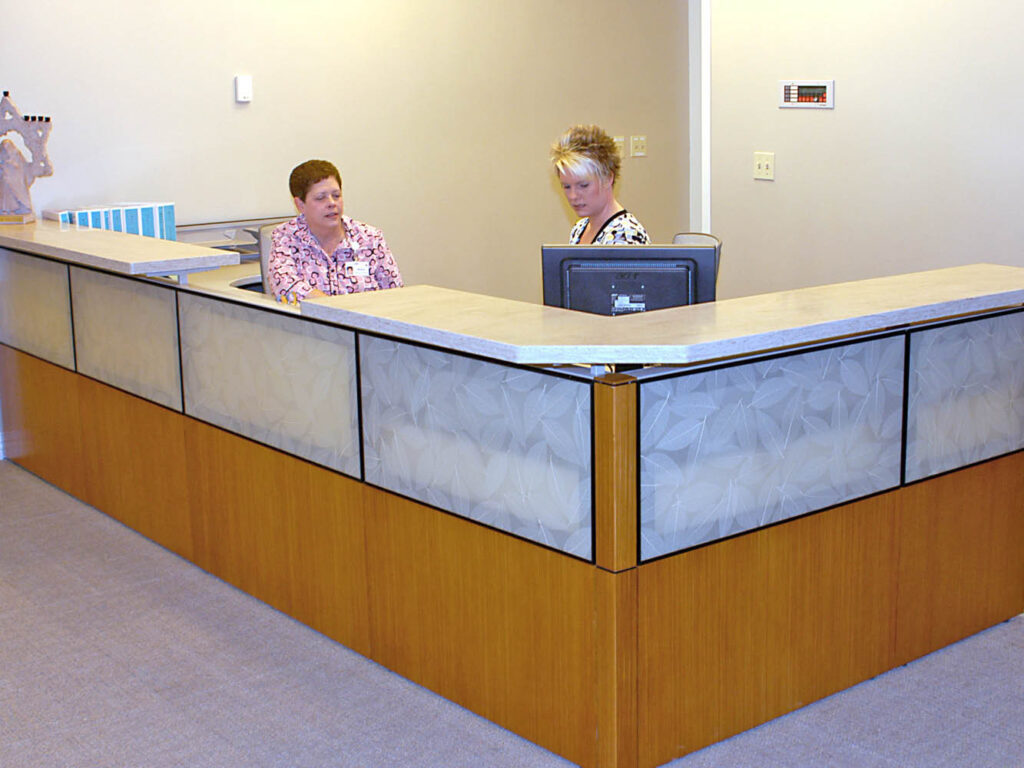
- 2010s: New nurses stations at the Rose Blumkin Jewish Home
-
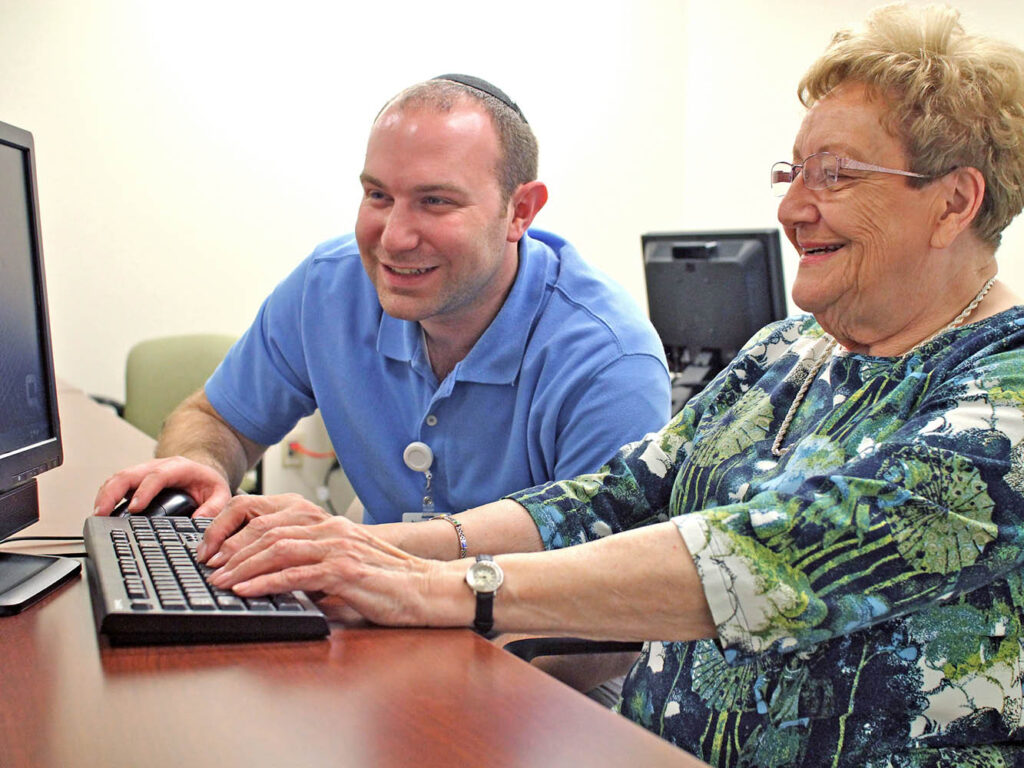
- 2010s: New computer lab at the Rose Blumkin Jewish Home
-
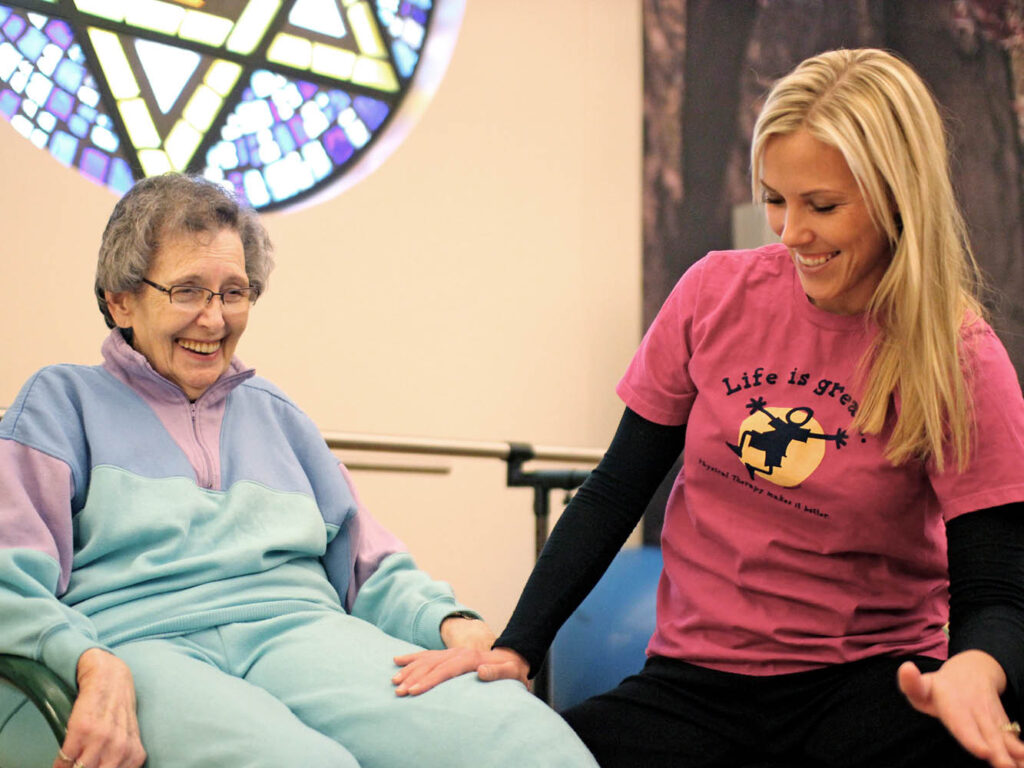
- 2010s: Physical therapy services at the Rose Blumkin Jewish Home