8/14/26
RBJH: A Legacy We Proudly Carry Forward – Part IV
As we prepare to open the new addition to the Rose Blumkin Jewish Home, we are running a series of articles reflecting on our community’s history of senior care. To help us fully understand the significance of where we are today, this series will look back at the journey that brought us here and the previous generations who made this moment possible. Special thanks to the Nebraska Jewish Historical Society archives and Jewish Press archives for providing source materials for this article.
Part 4: 2010 – Present
After its completion in 2010, the popularity of the renovated Rose Blumkin Jewish Home was immediate. RBJH now provided 24-hour licensed nursing care, long-term residential care, short-term rehabilitation, respite care, and hospice care in their beautiful new surroundings. The revolutionary Main Street concept was something Omaha’s senior care community had never seen.
The combination of quality care and comfortable surroundings once again increased consumer demand. By 2017 RBJH was facing a growing waitlist. Chris Ulven, who had taken over as Executive Director of the Rose Blumkin Jewish Home in 2016, knew it was something that needed to be addressed. Continuing to meet the changing needs of residents required growth and adaptability. RBJH had come a long way, but senior care was constantly evolving. Ulven and Jeff Kirshenbaum, then Jewish Senior Service Board co-chair, began evaluating their options. They looked at locations for expansion, gathered feedback, and brainstormed ways to modify the facility. A prominent piece of feedback that kept arising was resident room sharing.
“Market research was clear that Baby Boomers would not settle for semi-private rooms,” Ulven said. “They want their own space. Plus, data shows the mental and physical health of residents can improve when they are given greater privacy. When you think about the people we serve, most have been living by themselves for years,” he continued. “To ask them, at 85 or 90 years old, after 20 years of living alone, to have a roommate and expect it to be successful is nonsensical. Plus, the day-to-day roommate issues that our staff were having to deal with were constant. Most of these disputes resulted in us having to separate roommates, which was time consuming and logistically very challenging.
The research reports, trends in healthcare, and roommate issues strongly supported the case for adapting RBJH, but the most important factor in moving forward was community need.
“Having community members choose other providers because we didn’t have a private room available was difficult,” Ulven said. “Most were short term cases who needed therapy before going back home, but it always felt like we were letting the community down when we couldn’t provide what was desired.”
The project committee interviewed architects and eventually selected Community Living Solutions to draft conceptual drawings based on their ideas. The goals started to crystalize with three main areas coming into focus. One: transition to private rooms to provide greater independence, respect, and dignity for residents. Two: separate long-term and short-term residents and take short-term rehab to the next level. Three: bolster sustainability to ensure RBJH remains a trusted source of care for future generations.
“The sustainability model of RBJH has suffered since COVID,” Ulven said. “It currently costs us over $400 a day to care for a resident. After COVID people did not choose communal living for quite some time. The industry is just now beginning to see pre-pandemic census numbers again.”
The pandemic of 2019 was a major obstacle that left lasting ramifications. The first phase of the project was just about to begin when COVID hit. Everything was brought to a standstill.
“We were getting ready to replace flooring when COVID hit,” Ulven said. “Everything was placed on hold for 4 years. The cost of materials went up significantly. Supply chain issues were a challenge too. We had plenty of obstacles along the way, but early on we asked for, and received, help from some very smart business people. They helped us vet this project from a cost standpoint and as a business model. A lot of re-evaluations came from these meetings. I’m thankful every day that we did this. Because of their involvement, we generated a highly polished model, much better than what we started with,” he said.
When pandemic restrictions lessened and the committee had total faith in their business model, fundraising began. In the fall of 2023, the Jewish Federation of Omaha announced the “Enhancing Quality of Life” Campaign. It sought to elevate the quality of life for community seniors, ensure RBJH services were tailored to the next generation of residents, and to keep RBJH financially viable in the future. $23 million dollars was needed. Jan Goldstein, Bruce Friedlander, Norm Sheldon, and Marty Ricks led the campaign. Jon Meyers helped oversee and manage the project.
The creation of a new wing was a key focus. Plans called for the new wing to include a separate entrance, new dining room, rooftop balcony, and spacious 400 square foot rooms with private bathrooms, and private wi-fi. It would also feature a new short-term rehabilitation area with cutting edge equipment, including an AlterG Anti-Gravity machine.
Fundraising continued for three years before the goal was achieved. The community response was strong. The estate of Alan J. Levine pledged 4 million dollars towards the project. After this contribution, the second floor of the new wing was named the Alan J. Levine Rehabilitation Center at the Rose Blumkin Jewish Home. Community champions Tom Fellman and Howard Kooper (of blessed memory) also provided a “100 Days of Giving” dollar-for-dollar gift matching opportunity, helping the campaign end strong.
The project was broken up into three phases. Thanks to JFO Foundation endowment funds, phase one began before fundraising was complete. It included the modernization of existing spaces and the relocation of some nurses’ stations, allowing staff to be closer to the residents.
Phase two began in the fall of 2023. It included all the civil prep work necessary for the expansion. The road adjacent to RBJH was widened for access and parking. Improvements were also made to the campus stormwater management system.
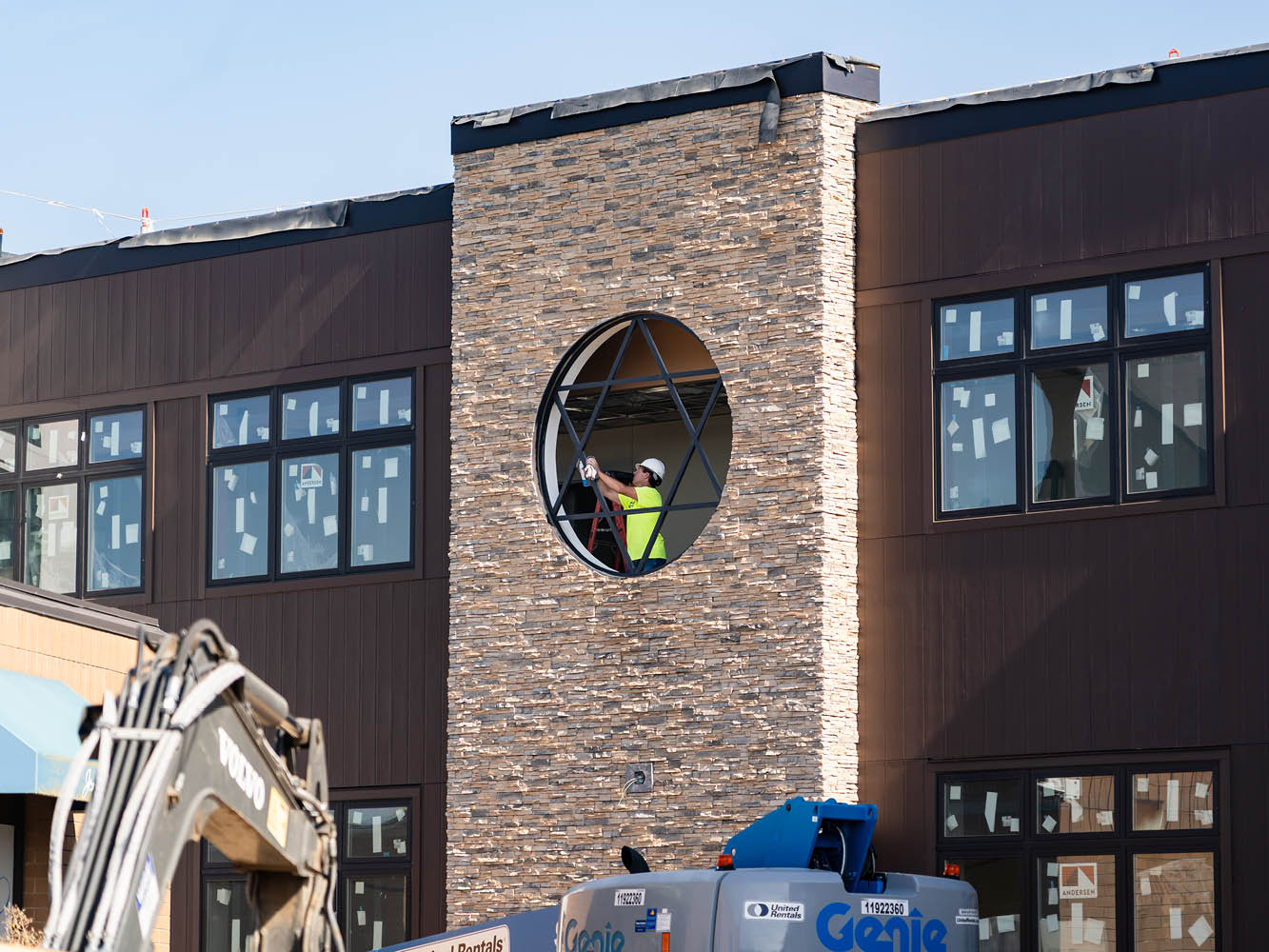
The third and final phase, construction of the new wing, broke ground on June 22nd, 2025. It would cover approximately 28,000 square feet and contain 32 new rooms. This expansion would allow for nearly all existing resident rooms to be converted into single-occupancy spaces. Substantial completion was projected for the fall of 2026. When complete, the Rose Blumkin Jewish Home would have 110 beds.
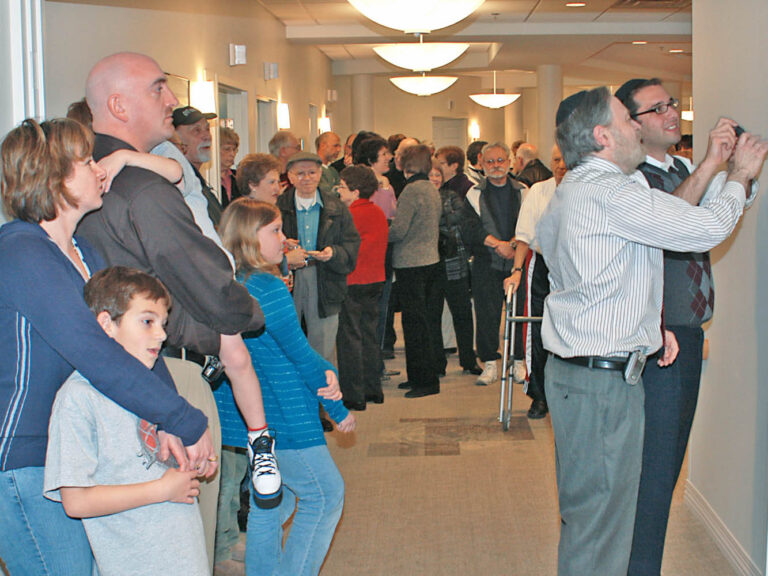
Final touches will include updated signage and the addition of a new donor wall on Main Street. The donor wall will recognize contributions of $180 or more made to the Enhancing Quality of Life Campaign. Estimated completion of the donor wall is set for this winter.
“This entire project took nine years from thought to completion,” Ulven said. “We couldn’t have done it without the support of everyone involved in the Enhancing Quality of Life campaign and project. Our community members, our lay leaders, our staff, and our volunteers made this happen.” he said.
As he looks to the future, Ulven recognizes that balancing supply and demand within the senior care industry is a delicate dance. Expectations for senior care evolve with each generation. It is projected by 2050, seniors will account for more than 21% of the total population. Advancing technology is also predicted to bring big innovations.
“I think the future of senior care will look substantially different, even ten years from now,” Ulven says. “The use of technology, AI, and robotics will become the norm as our industry struggles to find nursing staff. Regardless,” he continued, “my job is to make sure RBJH is in the best possible position it can be in. No matter what may come our way, we will continue to provide compassionate care that empowers residents to live each day in comfort with purpose and dignity.”
The Jewish Federation of Omaha proudly invites the community to celebrate substantial completion of the new wing and the Alan J. Levine Rehabilitation Center at the Rose Blumkin Jewish Home. An open house will be held Sunday, August 30th from 11:00 a.m. – 1:00 p.m. Those in attendance will get the first look at the new facilities before they open for use. RSVPs are required and can be completed at www.jewishomaha.org.
-
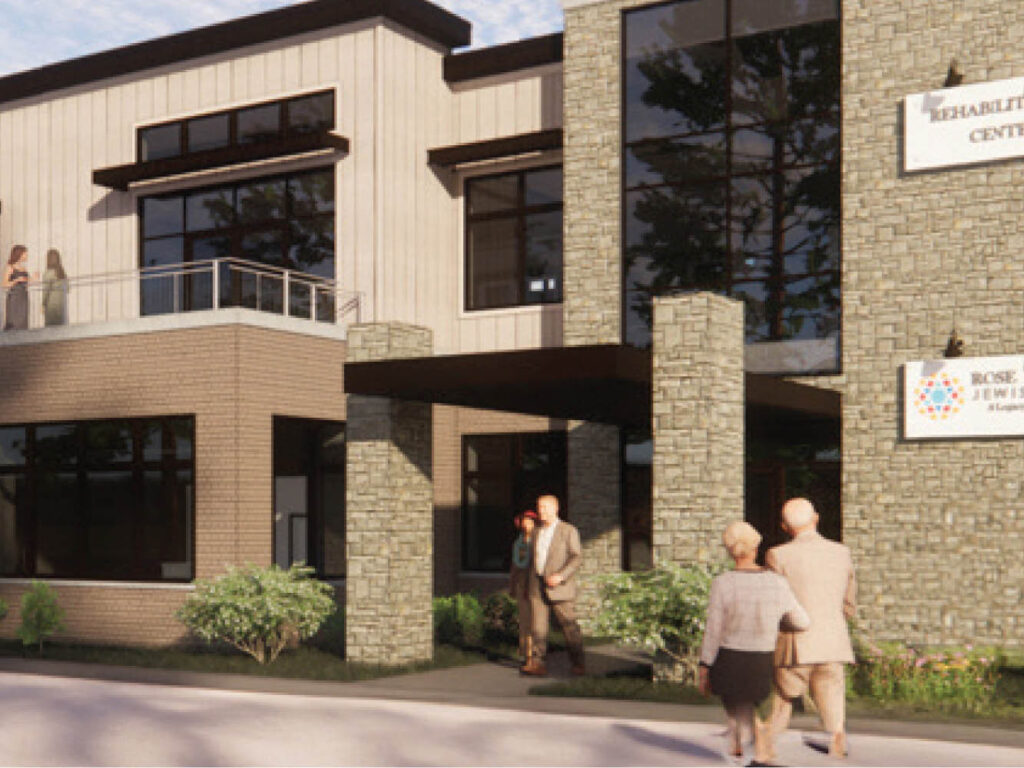
- Rendering of the addition to RBJH
-
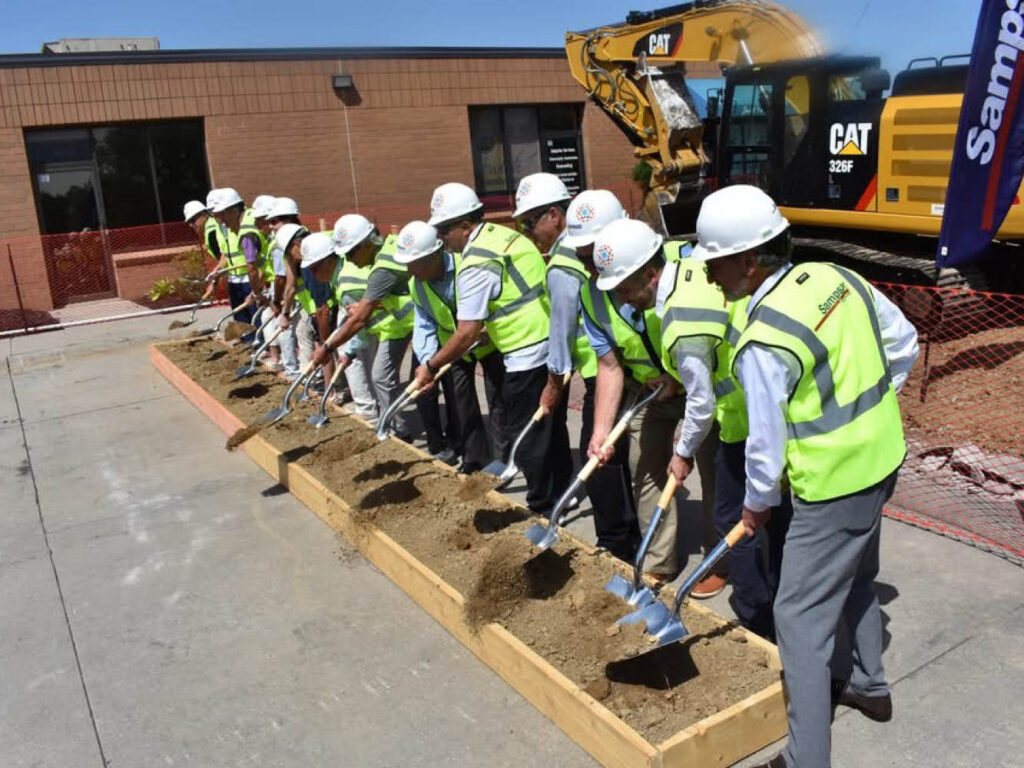
- June 22, 2025: Groundbreaking for the new wing including the Alan J. Levine Rehabilitation Center at the Rose Blumkin Jewish Home
-
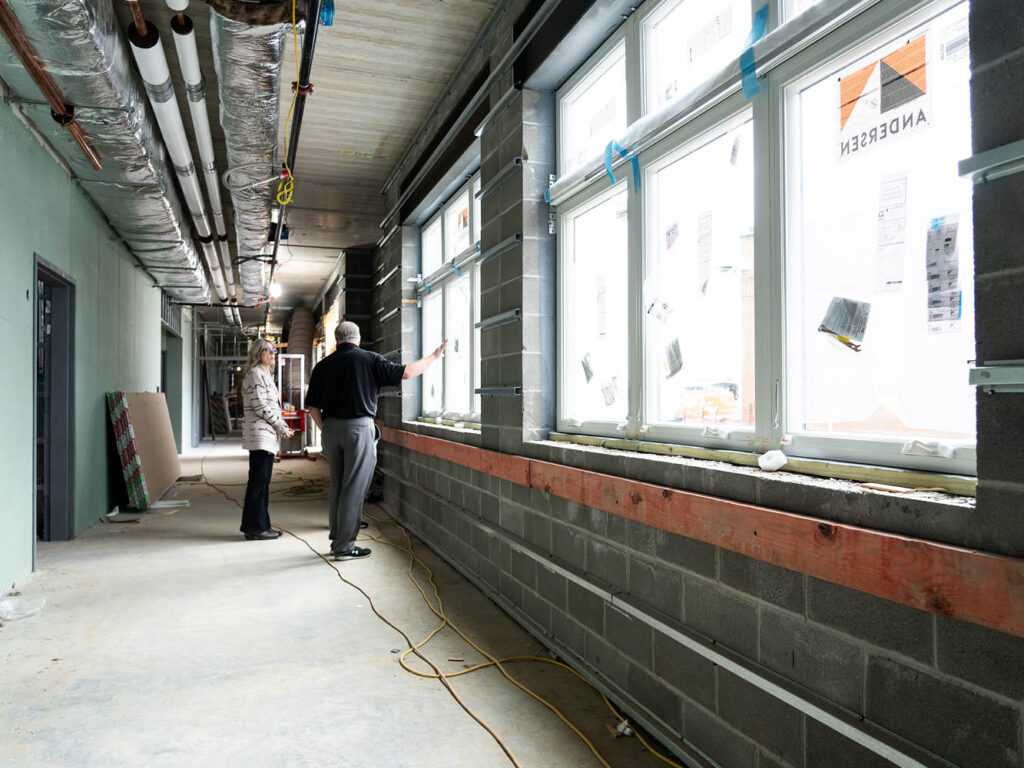
- 2026: Chris Ulven and Michelle Alberts tour construction of the new wing
-
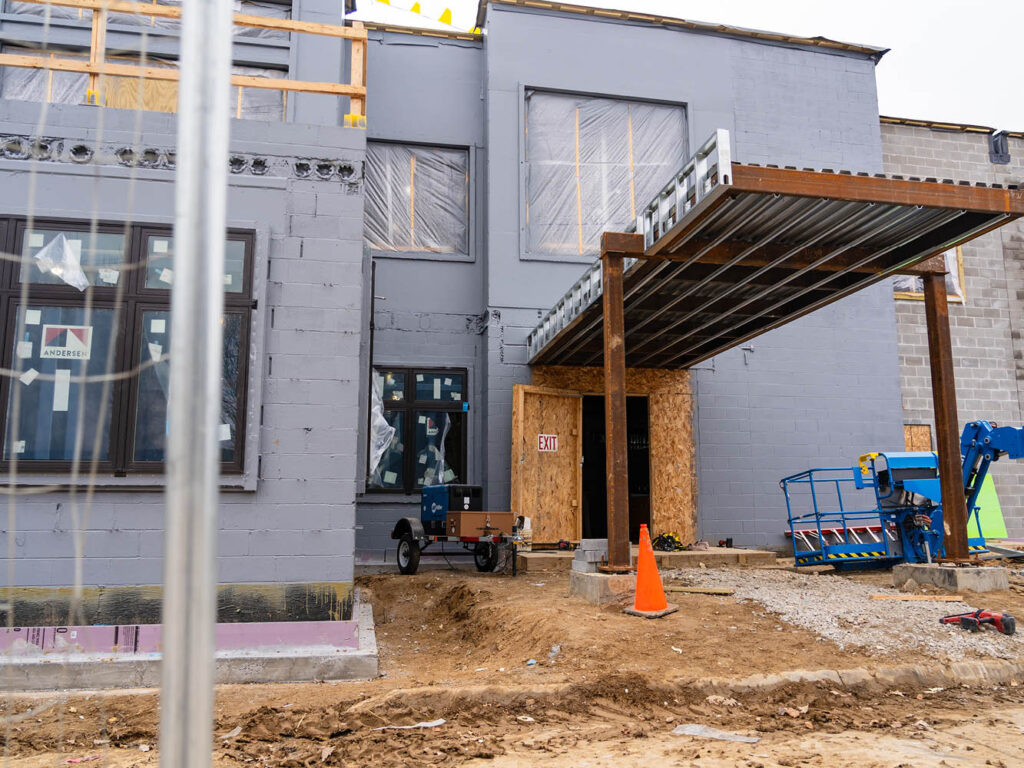
- 2026: Construction of the entrance to the new wing of RBJH
-
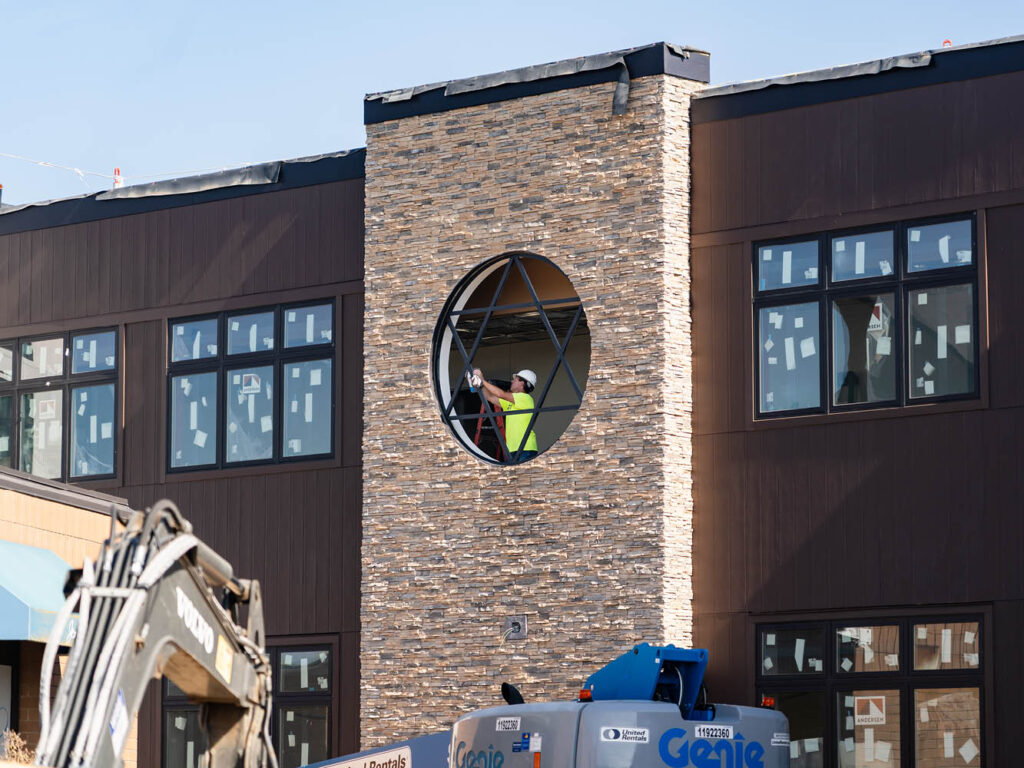
- 2026: Placement of the stained glass window in the Alan J. Levine Rehabilitation Center
-
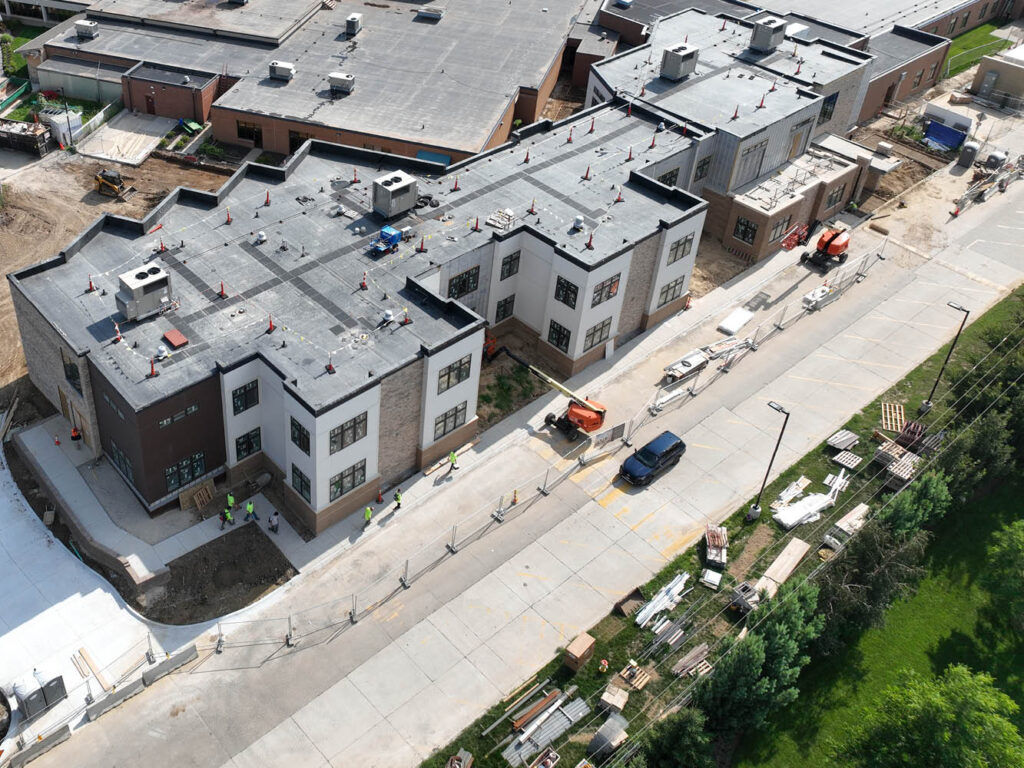
- 2026: Construction of the new wing to RBJH