8/10/26
RBJH: A Legacy We Proudly Carry Forward – Part II
As we prepare to open the new addition to the Rose Blumkin Jewish Home, we will be running a series of articles reflecting on our community’s history of senior care. To help us fully understand the significance of where we are today, this series will look back at the journey that brought us here and the previous generations who made this moment possible. Special thanks to the Nebraska Jewish Historical Society archives and Jewish Press archives for providing source materials for this article.
Part 2: 1950 – 1990
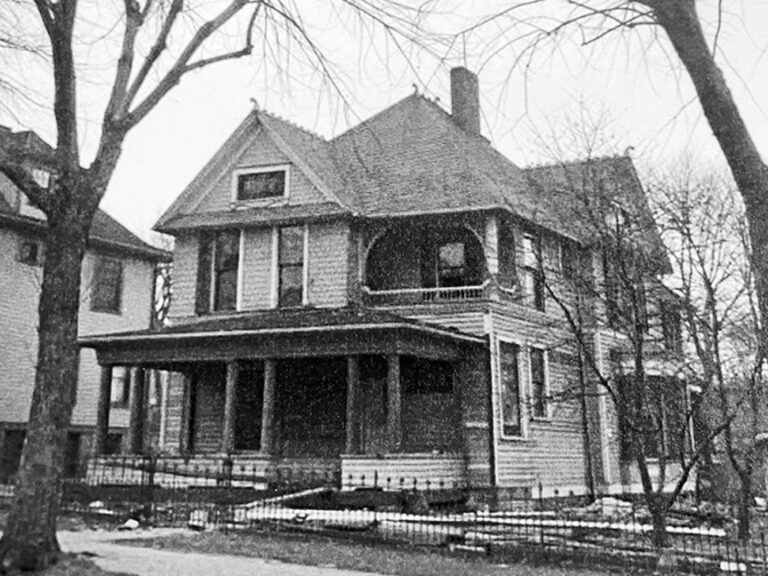
After its opening in 1948, demand for the Dr. Philip Sher Home for the Aged continued. By the 1950’s the national popularity of nursing home facilities was surging, thanks in part to new government grants. Residents of the Dr. Sher Home were now being housed in the medical quarters – an area meant exclusively for treatment of the sick. In 1956, the Sher Home announced a campaign for a new, $60,000 wing. Eight additional rooms and a porch were added.
1961 saw further expansion. The families of Mr. and Mrs. Louis Cherniak donated funds for a new wing. Known as the Cherniak-Chapman Pavilion, it had 12 private rooms. An additional gift from Mr. and Mrs. Hymie Milder also helped extend the services available at Sher.
Over the next few decades, specialized senior care and assisted living facilities became commonplace. The creation of Medicare and Medicaid in 1965 made healthcare more readily available to seniors. Stronger government regulations on nursing home care bolstered consumer confidence and further strengthened demand. Quality care for the elderly remained a top propriety for the Jewish Federation of Omaha.
In 1980, the Federation announced a plan for a new Center for the Aging. The Sher Home, now over 30 years old, needed to evolve. Federation President, Joe Kirshenbaum, announced Harlan Noddle and Isadore Tretiak as co-chairmen of the Center for the Aging project. Members of the Steering Committee included Leonard (Buddy) Goldstein and Nancy Greenberg.
The goal was to build a new facility at a central location that included a skilled nursing facility for up to 80 residents and a 52-unit apartment building for the well-elderly. Both were to be built on the same campus the Omaha Jewish Community Center had moved to in 1974. The Sher Home would be sold upon completion of the new building.
Mary Fellman, past president of the Federation, said the focus was on present and future needs. “The Dr. Sher Home has served us well but no longer meets all the standards of care for today. During the past 25 years, older people became younger in spirit … their need to fill leisure hours is more obvious.” Fellman also referenced a demographic survey showing 20 percent of the Jewish community was over the age of 60.
In 1981, the Federation approved plans as presented by the project committee and architect Roger Schutte. Authorization was given to launch a $3.6 million dollar campaign, including an endowment.
Meanwhile, 64 years after her arrival in America, the great success of Nebraska Furniture Mart put Rose Blumkin and her family in the position to make a substantial gift to the collective Jewish community. The family pledged 1 million dollars to the project. It was the single largest philanthropic gift ever made to the Jewish Federation of Omaha.
“I came from Russia without any money to a wonderful country, and I was lucky enough, to make a success,” Mrs. B said in an interview with the Jewish Press in 1981. “I respect elderly people… I want elderly people to be treated right. So, I want to give my love to the elderly people especially those who have no-one to care for them… Let people think before they die to do the best they can for others while they are still alive… A new home for the elderly will be like adding life to their years. They deserve a place to live in comfort and dignity, and having the Home with the JCC will be like reuniting the Jewish family — all the generations will be coming home.”
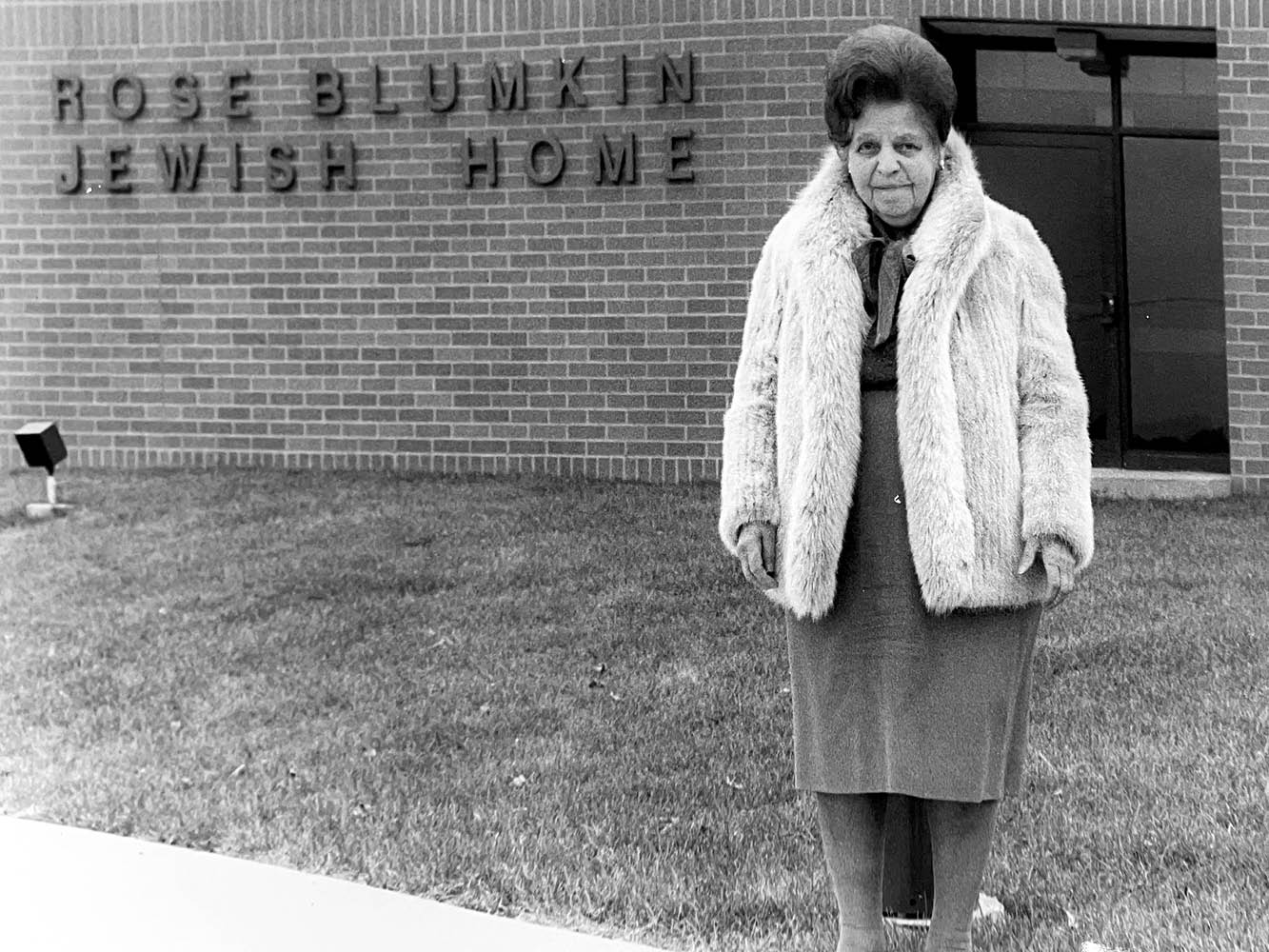
Upon this remarkable gift, the JFO Board unanimously approved the naming of the nursing home as “The Rose Blumkin Jewish Home”.
Additional gifts followed. The campaign goal was increased to $4.35 million, and the contract was given to Hawkins Construction Company. Groundbreaking for the Rose Blumkin Jewish Home (RBJH) was held on September 9th,1981. Over 400 people attended. Rose Blumkin, along with key members of the campaign, had the honor of “turning the earth.” Nancy Noddle and Maxine Kirshenbaum were chairmen of the reception. Individuals from the Bureau for the Aging and LOVE (League Offering Volunteers for the Elderly) were hosts.
Joe Kirshenbaum, Federation President said, “It is the inner strength of a community which determines how well it meets the challenges that confront it. Your total concern, support and participation have made this community stronger. Together we had a job to do. Together we did the job. Indeed, it makes one proud to be a part of the Omaha Jewish Community.”
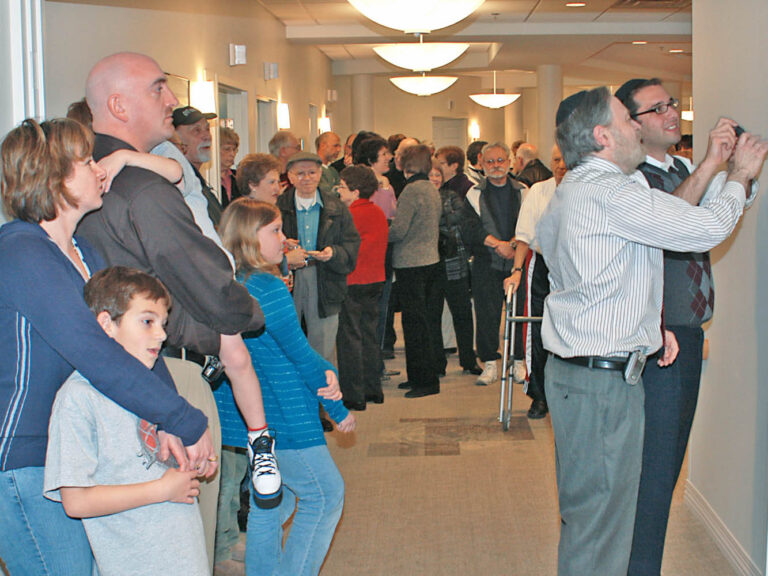
RBJH opened in November of 1982 with the mission of “providing Jewish seniors the necessary and appropriate programs and services to enhance the quality, comfort, and dignity of their lives.” The new facility had 50 rooms. The average cost for maintaining a resident was around $49 a day.
By 1987, the community struggled with RBJH waitlists of over 50 people. The Don Klein, president of the Bureau for the Aging, began a study on the need for increasing capacity. The study found that, to meet future demand and sustain viability for the next 15-20 years, RBJH would need to expand.
The Blumkin Family donated $500,000 to support the expansion. The Ike Friedman family also donated $50,000. By the summer of 1988, a $1.9 million / 25,000 sq. ft. addition to RBJH was approved. Gary Goldstein was appointed as architect. The 22-bed expansion would bring capacity to 119. A new entrance, offices, and kosher kitchens were included. Previously, RBJH had used the kitchen and meeting rooms within the JCC to meet their needs.
Groundbreaking took place in the spring of 1989. The expansion was completed by the fall of 1990. Following a national trend focused on personalized care, new occupants of RBJH were able to customize their rooms with one of three furniture styles and a color selection of blue or peach. The expanded dining rooms also allowed resident families to make reservations and dine with relatives on Friday nights.
-
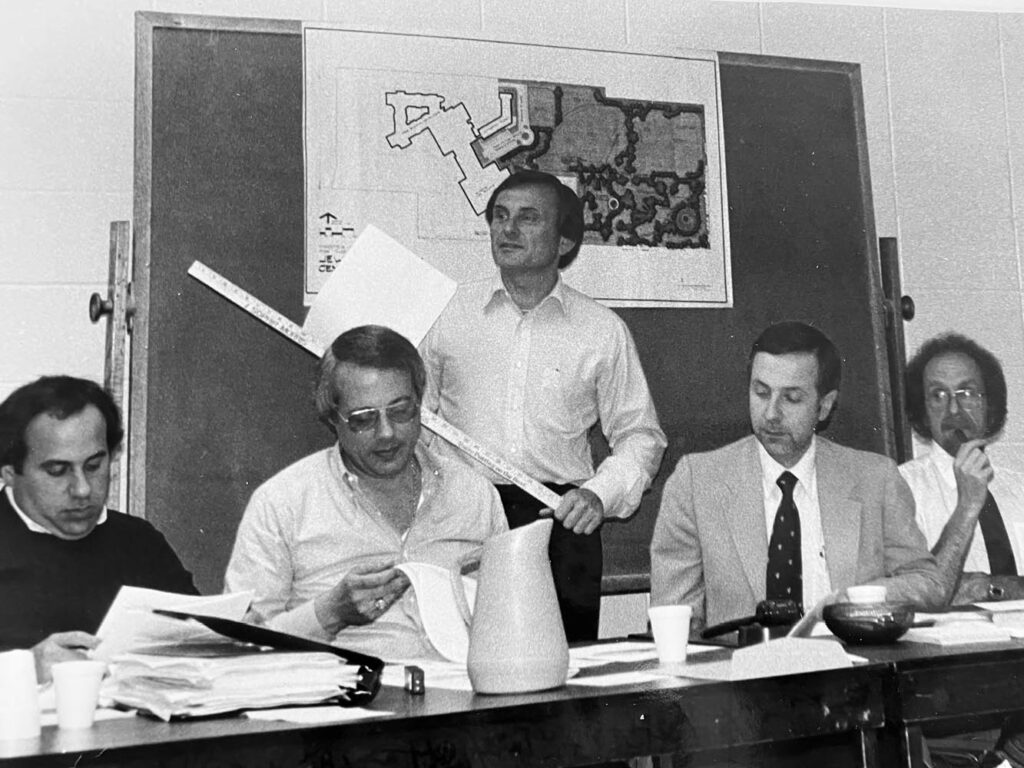
- RBJH planning committee. L to R: Paul Epstein, Dan Greenberg, Joe Kirshenbaum, Paul Cohen, Lou Solomon
-
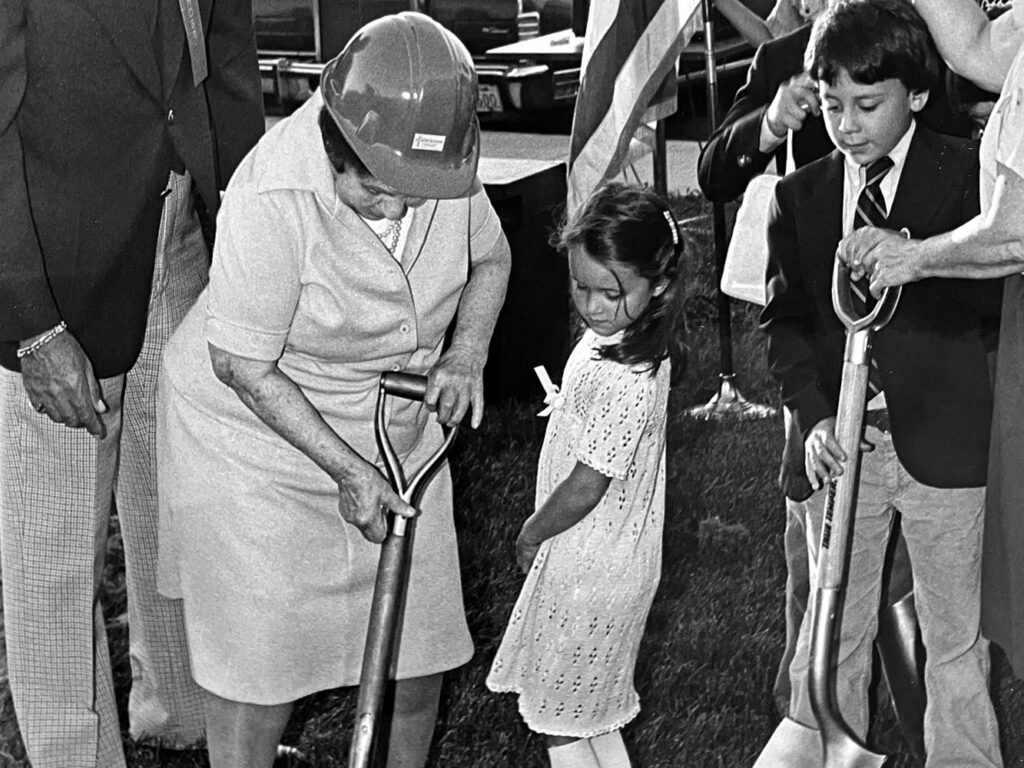
- Rose Blumkin with her family at the groundbreaking for the Rose Blumkin Jewish Home
-
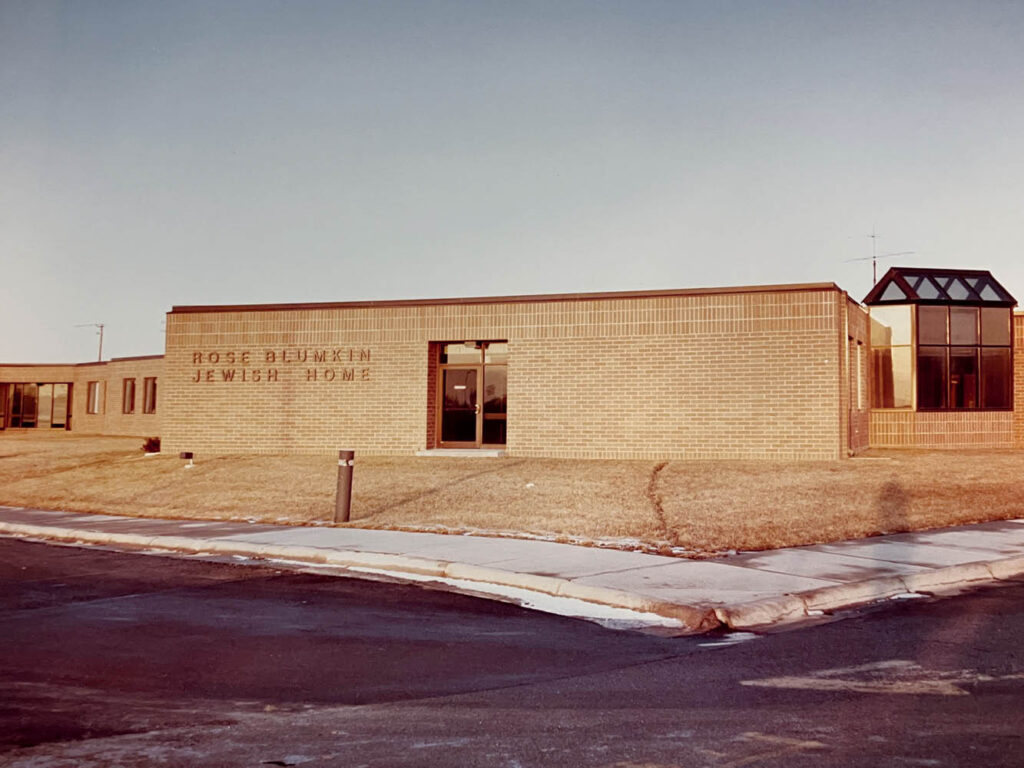
- 1982: The Rose Blumkin Jewish Home opens
-
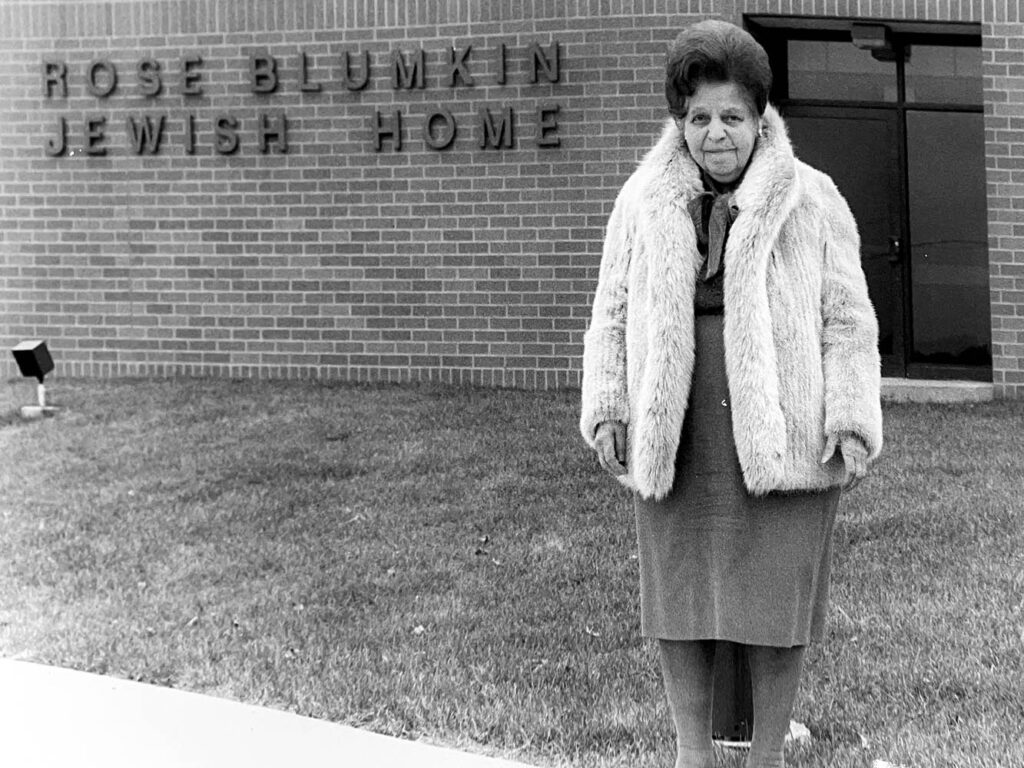
- Rose Blumkin in front of the Rose Blumkin Jewish Home
-
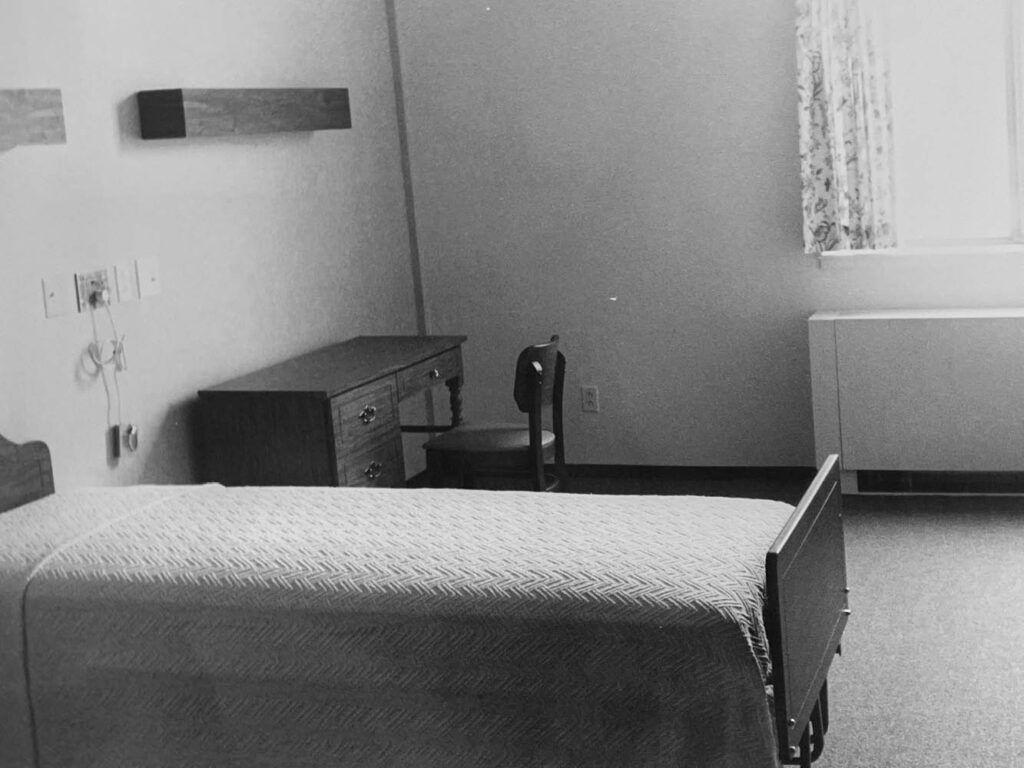
- 1980s: Resident room in the Rose Blumkin Jewish Home
-
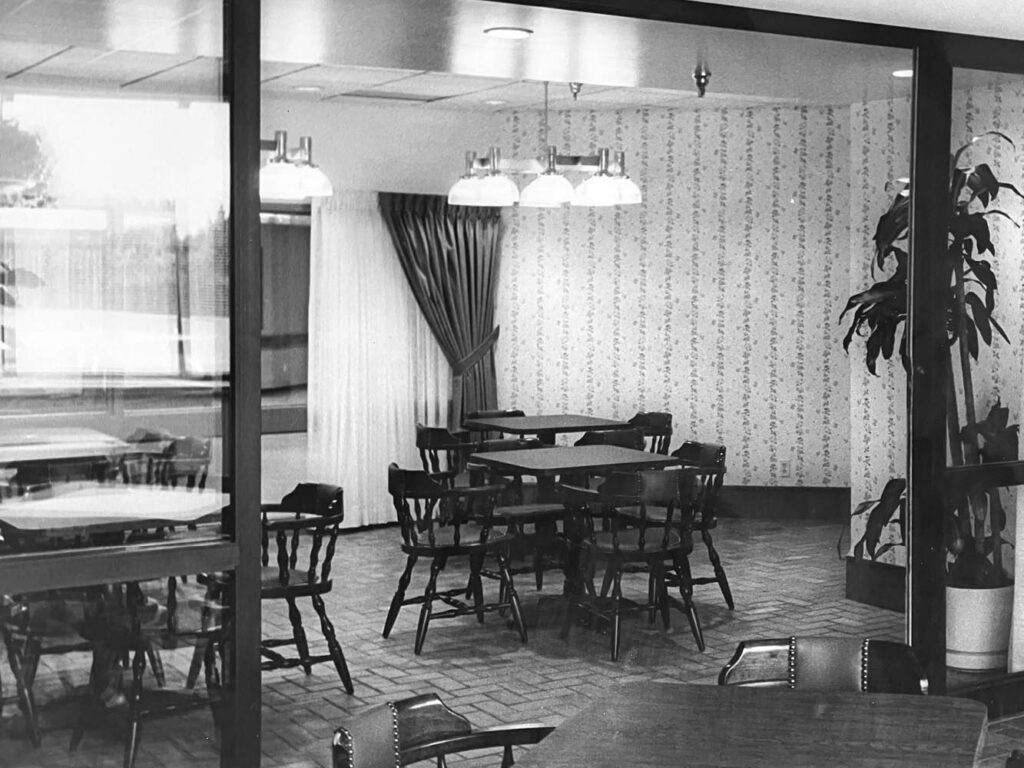
- 1980s: Dining area in the Rose Blumkin Jewish Home
-
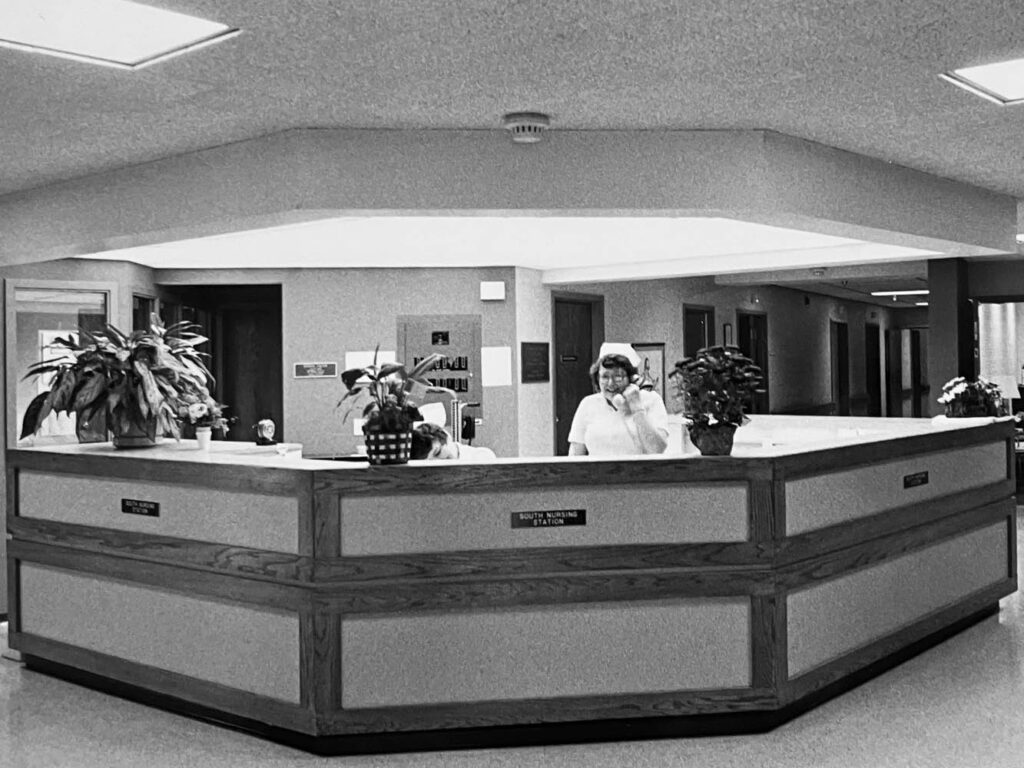
- 1980s: Nurses station at the Rose Blumkin Jewish Home